
Safety note: this guide is for general home-gym maintenance education. Follow your manufacturer’s manual first. If a cable is frayed, a pulley is cracked, or the Smith bar does not lock correctly, stop using the machine until the part is repaired or replaced.
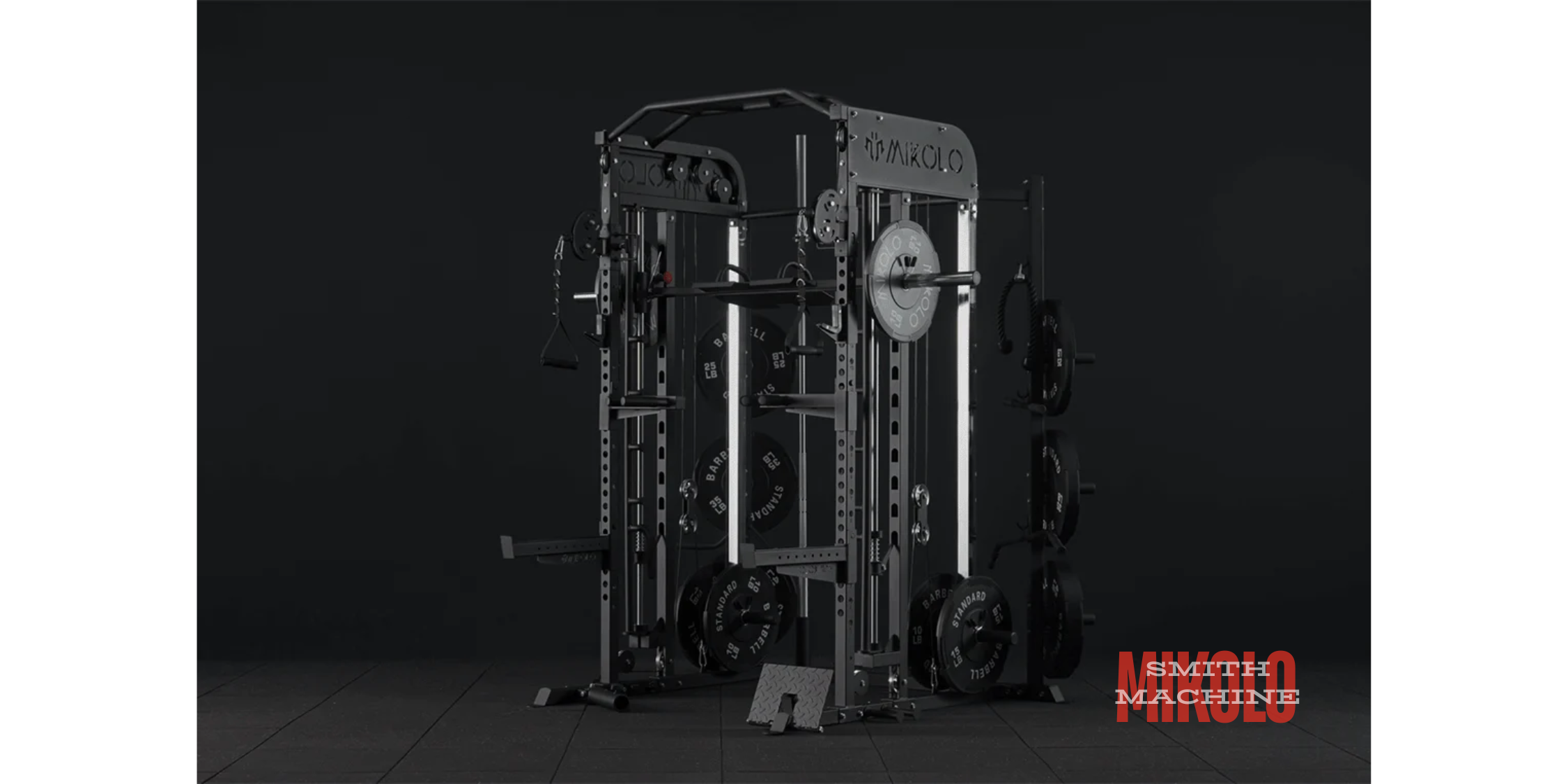
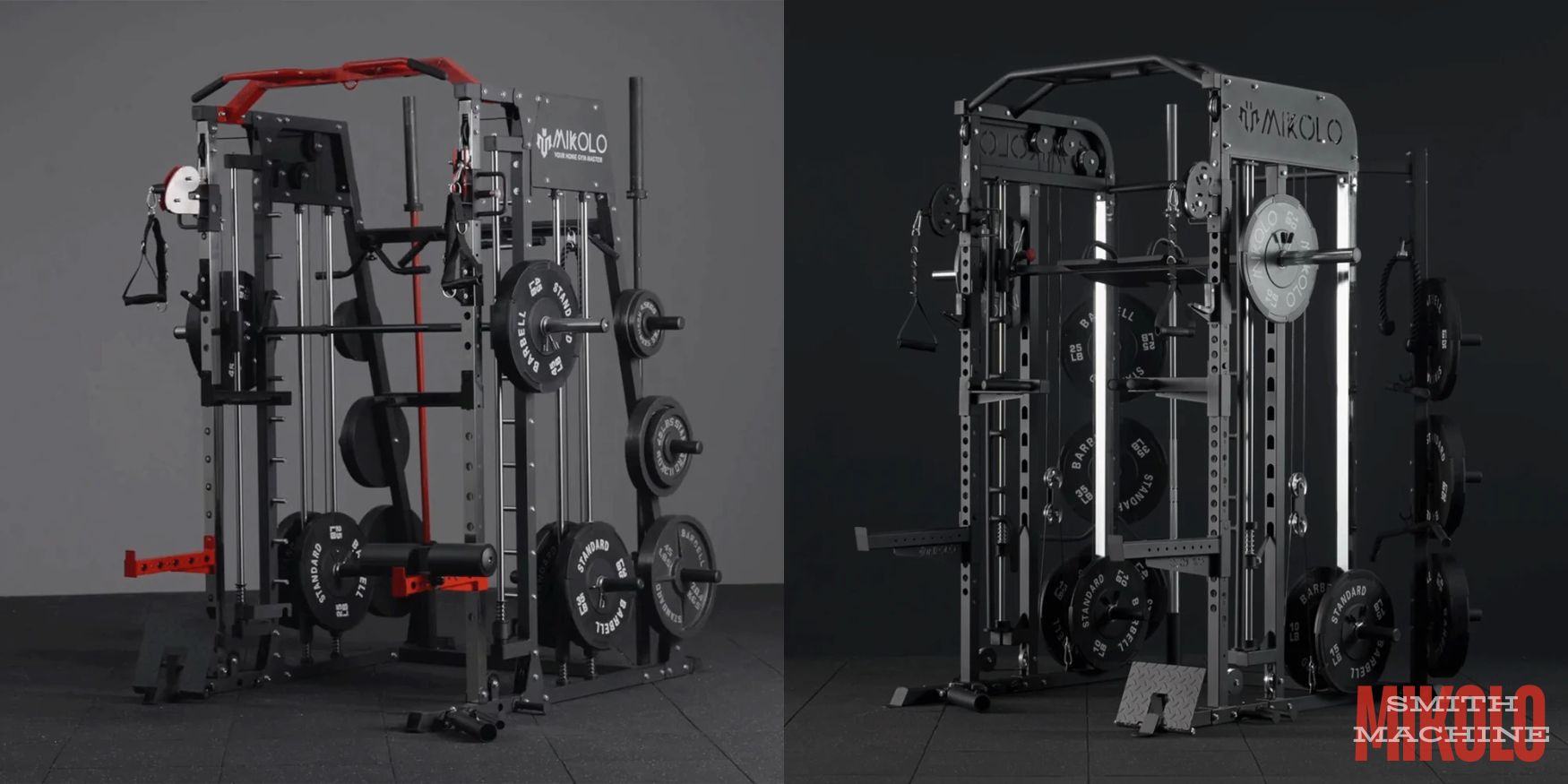
Smith machine cable maintenance is boring in the best possible way. A few minutes of inspection can prevent rough cable travel, noisy pulleys, uneven resistance, stuck guide rods, and unsafe training. If your all-in-one Smith machine has a cable crossover, lat pulldown, low row, or weight stacks, treat the cable path as part of your weekly gym routine.
Quick maintenance schedule
| Frequency | What to check |
|---|---|
| Every workout | Smith hooks, safety stops, loose obvious hardware, cable path before heavy pulls. |
| Weekly | Cable coating, pulley rotation, attachment clips, guide rods, J-hooks, spotter arms. |
| Monthly | Frame bolts, plate storage pins, weight stack selector pin, bench contact points, flooring stability. |
| After moving the rack | Full hardware re-check, cable alignment, level frame, and Smith bar lock test. |
1. Inspect the cable coating
Look for fraying, flattened sections, sharp bends, rust, exposed wire, bubbling coating, or spots that feel rough when you run a cloth along the cable. Do not use your bare hand aggressively on a suspected fray; a broken wire strand can cut skin.
If you see exposed wire or a cable that jumps out of the pulley groove, stop using the cable station. Replace the cable or contact the manufacturer. A cable failure under load is not something to “train around.”
2. Check every pulley
Pulleys should spin smoothly, sit square, and keep the cable centered in the groove. Listen for grinding, scraping, or clicking. A little cable noise is normal, but a pulley that wobbles or binds can damage the cable quickly.
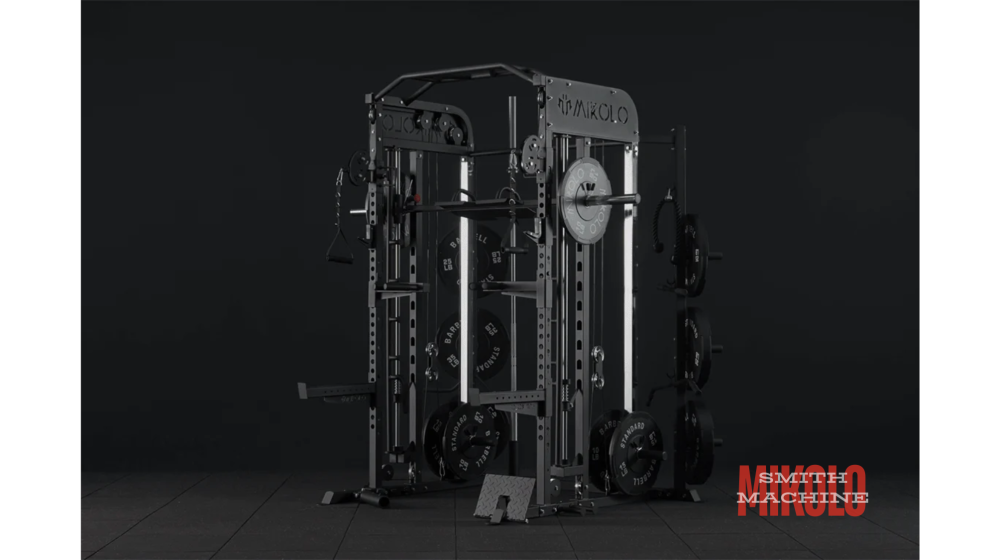
Mikolo’s current M4 2.0 pages emphasize upgraded aluminum pulleys on several versions, while Major Fitness current higher-end listings also highlight aluminum pulley systems. The material matters less than the condition: clean, aligned, and moving freely.
3. Clean guide rods and Smith rails
Dust, chalk, pet hair, garage debris, and dried lubricant can make the Smith bar feel rough. Wipe guide rods with a clean cloth. Use only lubricant approved by the manufacturer, and avoid spraying random products onto cables, rubber, upholstery, or flooring.
If the Smith bar catches at one point, check whether the frame is level, the guide rods are clean, and the hooks are engaging evenly. If the bar still binds, stop and contact support rather than forcing reps.
4. Re-check J-hooks and spotter arms
J-hooks and safety spotter arms are not decorations. They carry real load during free-weight squats and presses. Make sure they are fully seated, facing the correct direction, and not cracked or bent. If your rack uses UHMW or protective liners, check that those pieces are still attached.
For beginners, our Smith machine exercises guide explains how to set safety stops before training. Maintenance and setup belong together.
5. Watch plate-loaded cable habits
On plate-loaded cable systems, load both sides evenly when the movement requires it, use collars when appropriate, and avoid letting plates swing into the frame. Do not yank the handle from a dead stop. A smooth first inch of motion is kinder to the cable, pulley, and your shoulder.
If you use a weight-stack version, check the selector pin and stack travel. The pin should fully seat before each set. If plates hang up or drop unevenly, pause and inspect alignment.
6. Keep an inspection log
A simple note on your phone is enough. Record the date you cleaned guide rods, tightened bolts, noticed cable wear, or replaced an attachment. This helps you catch slow changes before they become safety issues.
When to stop using the machine
- Any exposed wire or broken cable strand.
- A pulley that cracks, wobbles, or grinds.
- A Smith bar that fails to lock reliably.
- A safety arm or J-hook that bends or does not seat fully.
- A weight stack that drops suddenly or hangs unevenly.
- Frame bolts that repeatedly loosen after tightening.
Bottom line
Smith machine cable maintenance is simple: inspect cables, keep pulleys aligned, clean guide rods, verify safety hardware, and stop using the machine when something feels wrong. A smoother rack is usually a safer rack, and a safer rack gets used more often.
For model-specific buying and setup help, read our Mikolo assembly and maintenance guide, Mikolo Smith machine review, and all-in-one Smith machine buying guide.