

Affiliate disclosure: this Mikolo Smith machine review contains Mikolo links. If you buy through those links, FitProGuides may earn a commission at no extra cost to you. Prices, packages, and availability can change; always confirm the current specs on the seller page before ordering.
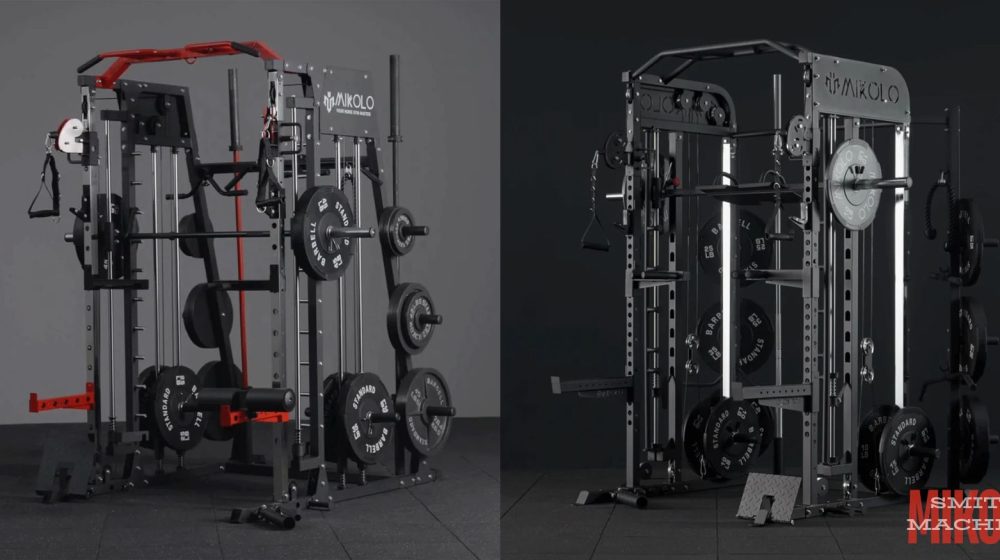
Mikolo Smith machine review, updated for 2026: the current M4-2.0 lineup is much more interesting than the older “budget all-in-one rack” pitch. Mikolo now sells Standard, Ultra, and Elite versions around the same core idea: a Smith machine, functional trainer, half-rack, pull-up station, landmine, and storage system packed into one home-gym footprint. That is a lot of training utility for the price, but it is not the right answer for every buyer.
The short version: the Mikolo M4 / M4-2.0 Smith Machine makes the most sense for home-gym lifters who want cable work, guided Smith lifts, and free-weight basics in one station. It makes less sense if you need commercial 3×3 rack compatibility, very heavy barbell training, or a machine that feels like a full commercial gym unit. If you want a deeper single-model breakdown, keep this page open and also read our Mikolo M4 Smith Machine detailed review.
Mikolo Smith machine review: quick verdict
The Mikolo Smith machine is best viewed as a value-focused all-in-one home gym, not as a pure power rack replacement. Its appeal is simple: you get one station that can handle Smith squats and presses, cable flyes and rows, lat pulldowns, pull-ups, landmine work, and basic barbell training. For a garage or spare-room gym, that kind of exercise menu is hard to ignore.
| Best for | Think twice if | Why |
|---|---|---|
| Home-gym buyers who want one compact training station | You already own a high-end rack and separate functional trainer | The value is in consolidation |
| Beginners and intermediate lifters | You lift very heavy or want commercial-grade steel | Mikolo is feature-rich, but still budget/value oriented |
| People who love cable accessories | You dislike 2:1 cable ratios | 2:1 feels smoother and lighter, but halves the effective load |
| Garage and basement gyms with enough ceiling height | Your ceiling is under roughly 88 inches | Most M4-style setups sit around 87 inches tall |
| Buyers who want guided Smith work plus free-weight options | You want maximum third-party attachment compatibility | 2×2-style uprights limit some ecosystem upgrades |
What changed since the older Mikolo M4?
The older Mikolo M4 was popular because it was affordable and packed with stations, but it also drew complaints around refinement. Current M4-2.0 pages and recent third-party reviews point to several upgrades: tighter 2-inch hole spacing, higher cable travel, improved J-cups, better storage, smoother Smith guidance, and options for aluminum pulleys or selectorized stacks depending on version.
That matters because the original version’s biggest weakness was not the idea. The idea was excellent: combine a Smith machine, cable crossover, and rack into one footprint. The problem was polish. The newer M4-2.0 direction is Mikolo trying to keep the same value proposition while making the machine less frustrating to use day after day.
M4-2.0 Standard vs Ultra vs Elite
Mikolo’s naming can get messy, especially because retailers bundle benches, plates, bars, and accessory kits differently. As checked on August 7, 2026, the official Mikolo lineup showed a Standard M4-2.0, an Ultra M4-2.0, and an Elite version with dual weight stacks. Treat the table below as a buyer-fit map, not a guaranteed price sheet.
| Version | Best fit | Main tradeoff |
|---|---|---|
| M4-2.0 Standard | Budget buyers who want the core Smith + cable + rack setup | More basic pulley/components than upper versions |
| M4-2.0 Ultra | Most home-gym buyers who want a smoother cable feel without weight stacks | Plate-loaded cables still require loading/unloading plates |
| M4-2.0 Elite | Buyers who want selectorized weight stacks and faster cable changes | Costs more and availability can move quickly |
If cable training is a major reason you are buying, the Elite-style weight stack setup is attractive because changing resistance is faster. If price matters more, the Standard or Ultra can still make sense. The key is being honest about how you train. Plate-loaded cables are cheaper, but if you hate loading plates between every set, the “cheaper” choice may annoy you three times per week for years. Tiny gym goblin math, but real.
Footprint, ceiling height, and layout
One reason the Mikolo Smith machine keeps showing up in home-gym searches is footprint. Current retailer listings for the M4-style machine commonly land around 71 inches deep, roughly 75 inches wide with the Smith bar area, and about 87 inches tall. Lowe’s also markets the M4 package as a compact setup around 18 square feet, with wall-friendly positioning and integrated storage.
Those numbers are friendly for a garage gym, but they still need measuring. Before buying, tape out the footprint on your floor and add working space around the rack. You need room to load plates, pull cable handles out, unrack a bar, use the bench, and walk around without performing a sideways crab shuffle every set.
Ceiling height is the other big check. If your ceiling is close to the machine height, pull-ups may be awkward even if the rack technically fits. If you are building in a basement, measure from floor to joist or ductwork, not just floor to finished ceiling.
Smith machine performance
The Smith station is the feature that makes this more than a normal power rack. Mikolo’s current M4-2.0 pages describe a linear-bearing Smith system with spring safety support and multiple height settings. That gives newer or solo lifters a guided bar path for squats, presses, split squats, calf raises, hip thrusts, and other controlled movements.
The upside is confidence. A guided bar can make setup feel less intimidating, especially if you train alone. The downside is that a Smith path is fixed. It does not replace free-weight technique, and it may not feel natural for every body type or every lift. If you are unsure how Smith training differs from rack training, read our Smith machine vs power rack guide before choosing.
Cable system and pulley ratio
The cable system is the strongest reason to consider Mikolo over a simple rack. The M4-style setup gives you functional trainer movements, lat pulldowns, low rows, curls, triceps work, lateral raises, cable flyes, and accessory work without buying a separate cable tower.
Most current M4-2.0 information points to a 2:1 cable ratio. That means 100 pounds loaded usually feels like about 50 pounds in your hands, before friction and setup differences. This is not automatically bad. A 2:1 ratio gives longer cable travel and smoother control for accessory work. It is especially useful for lateral raises, face pulls, curls, rehab-style movements, and higher-rep bodybuilding work.
The tradeoff is top-end load. Strong lifters may run out of effective resistance sooner on heavy rows or pulldowns, especially on stack versions. If pulley ratio is a deciding factor for you, read our 1:1 vs 2:1 pulley ratio guide. That page explains why cable ratio changes the feel of the whole machine.
Attachments and storage
Current M4-2.0 packages can include a practical accessory kit: sandwich J-cups, spotter arms, a 3-in-1 pad, landmine, multi-grip pull-up bar, storage crossbar, lat pulldown bar, T-bar, tricep rope, clips, cable bar, and D-handles. Retailer bundles may also add a bench, bumper plates, or cable accessories.
This is a strong package if you are starting from scratch. It means you can train almost immediately once assembly is done. But included attachments are usually “good enough” accessories, not boutique upgrades. Over time, you may still want better cable handles, a nicer lat bar, ankle straps, MAG-style grips, or a dedicated row handle. For upgrade ideas, see our Smith machine accessories guide.
Pros and cons
| Pros | Cons |
|---|---|
| Combines Smith machine, rack, cable trainer, pull-up bar, landmine, and storage | Assembly takes time and patience |
| Good value for buyers building a first serious home gym | 2:1 cable ratio may feel too light for heavy pulldowns/rows |
| Compact compared with buying separate machines | Not a commercial 3×3 rack ecosystem |
| Newer M4-2.0 versions improve spacing, storage, and cable travel | Ceiling height can limit pull-ups and overhead work |
| Elite-style stack option speeds up cable training | Higher versions can move close to premium-rack pricing |
Who should buy the Mikolo Smith machine?
Buy it if you want one station that covers most home-gym strength training needs and you are realistic about the tradeoffs. The Mikolo Smith machine works especially well for people who want to train three to five days per week at home, mix barbell and cable movements, and avoid buying several separate machines.
It is also a strong fit for beginners who want guided lifts and clear safety points. You can use the Smith bar for controlled lower-body and pressing work, then use the cable system for back, shoulders, arms, and accessories. If you are new to Smith training, start with our Smith machine exercises for beginners.
Who should skip it?
Skip or rethink it if you are chasing a commercial-grade rack feel, want deep third-party attachment compatibility, or already own a strong rack plus a separate functional trainer. Also be careful if your training is mostly heavy free-weight squats, bench, deadlift variations, and rack pulls. In that case, a dedicated power rack may still be the better center of the gym.
Very low ceilings are another dealbreaker. A machine can technically fit and still feel bad to use. Pull-ups, cable work, and bar storage all need practical clearance. Measure first; optimism is not a layout tool.
Assembly and maintenance notes
Expect a large box situation and a real assembly session. This is not a “tighten four bolts and go” piece of equipment. Lay out hardware, loosely assemble the frame before final tightening, keep the uprights square, and recheck cable routing before loading weight. If something feels rough, do not force it through a workout. Fix alignment first.
After assembly, make maintenance part of the plan. Check bolts, cable routing, pulleys, Smith guide rods, J-cup contact points, and safety catches regularly. Our Mikolo Smith machine assembly and maintenance guide covers the step-by-step side in more detail.
Mikolo M4 vs M7 and other alternatives
The M4 is usually the more obvious all-in-one pick for people who want the current M4-2.0 ecosystem and a compact Smith/cable/rack hybrid. The Mikolo M7 Smith Machine may appeal to buyers comparing pulley feel, station layout, and older Mikolo-style packages. If you are still early in the decision, compare the M4 against power racks, functional trainers, and Smith-only machines before locking in.
A simple decision rule: choose Mikolo if you want maximum exercise variety per square foot. Choose a traditional rack if free-weight barbell training is the priority. Choose a standalone functional trainer if cable work matters more than Smith work.
Bottom line
The Mikolo Smith machine is a strong value pick for home-gym buyers who want a compact all-in-one station with Smith work, cables, storage, and rack basics. The M4-2.0 lineup looks meaningfully more refined than the older version, especially around spacing, cable travel, storage, and Smith feel. It is still not a commercial rack, and it is not perfect for very heavy lifters or people who want a premium attachment ecosystem.
If your goal is a practical garage-gym centerpiece, the Mikolo Smith Machine lineup is worth comparing. If you want the current M4-focused option, check the Mikolo M4 Smith Machine page and confirm the exact version, package, and accessories before buying.