

Disclosure: FitProGuides may earn a commission when you buy through qualifying links. This does not change the price you pay or our editorial recommendations.
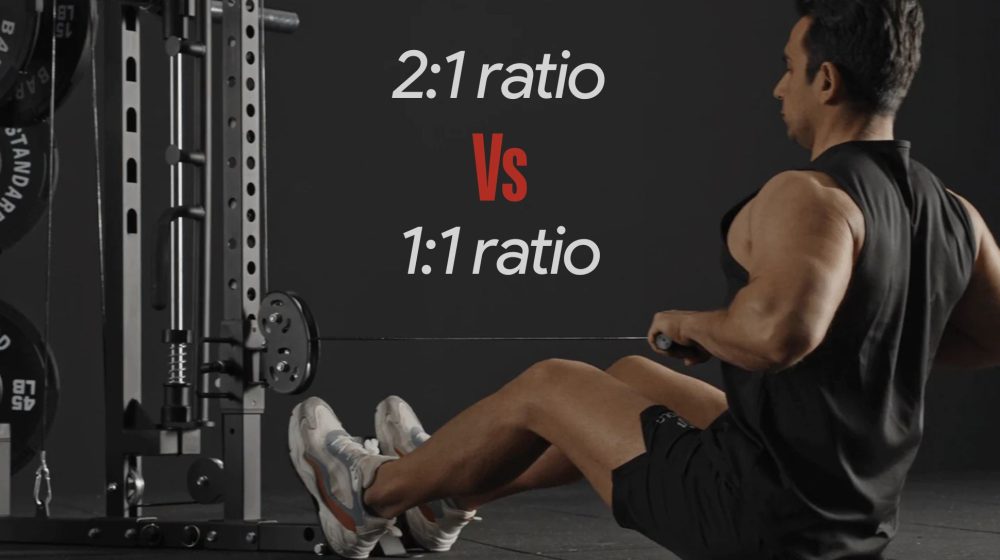
A 2:1 pulley ratio means the resistance at one cable handle is roughly half the weight selected or loaded, while a 1:1 ratio delivers roughly the selected weight. For example, 100 lb on an ideal 2:1 cable feels like about 50 lb at the handle; on a 1:1 cable, it feels close to 100 lb. The better choice depends on whether you value smoother movement and smaller weight jumps or heavier direct resistance.
One important distinction: the pulley ratio describes the functional-trainer cable system, not the guided Smith bar itself. If you are comparing complete home-gym stations, check both the cable ratio and the Smith bar specifications before buying.
1:1 vs 2:1 Pulley Ratio at a Glance
| Feature | 2:1 pulley | 1:1 pulley |
|---|---|---|
| Approximate handle resistance | Half the selected or loaded weight | Close to the selected or loaded weight |
| Example with 100 lb | About 50 lb at one handle | About 100 lb at one handle |
| Cable travel | Usually longer | Usually shorter |
| Weight increments | Smaller effective jumps | Direct stack or plate jumps |
| Best fit | Functional training, unilateral work, smooth high-rep sets | Heavy pulldowns, rows, belt squats, and strength-focused cable work |
| Main tradeoff | You need more loaded weight for heavy work | Resistance jumps can feel larger and the cable may travel less |
How Pulley Ratio Changes the Weight You Feel
Pulley ratio describes the mechanical relationship between the moving weight and the cable handle. In a simplified system:
- 1:1: handle resistance is approximately selected weight × 1.
- 2:1: handle resistance is approximately selected weight ÷ 2.
- 4:1: handle resistance is approximately selected weight ÷ 4.
Real machines can feel slightly different because pulley friction, cable routing, attachment weight, and manufacturing tolerances affect the system. Use the ratio as the starting point for comparing machines, then track your own settings consistently.
Worked examples
- 60 lb on a 2:1 system: about 30 lb at one handle.
- 60 lb on a 1:1 system: about 60 lb at one handle.
- A 10 lb stack increase on 2:1: roughly a 5 lb increase at the handle.
- A 10 lb stack increase on 1:1: roughly a 10 lb increase at the handle.
That last difference matters in a home gym. Smaller effective jumps make a 2:1 system easier to progress on lateral raises, cable flyes, curls, and rehabilitation-style movements. A 1:1 system makes better use of a limited stack when you need heavy rows or pulldowns.
Why a 2:1 Pulley Often Feels Smoother
In a 2:1 system, the cable usually travels about twice as far as the weight carriage. That extra travel suits movements with a long range of motion and allows more flexible positioning around an adjustable trolley. It also reduces the effective size of each weight increment.
A 2:1 ratio is usually the better fit if you prioritize:
- Unilateral cable exercises.
- Cable flyes and crossovers.
- Lateral raises, curls, and triceps work.
- Long-range rotational or athletic movements.
- More gradual progression for beginners or lighter accessory work.
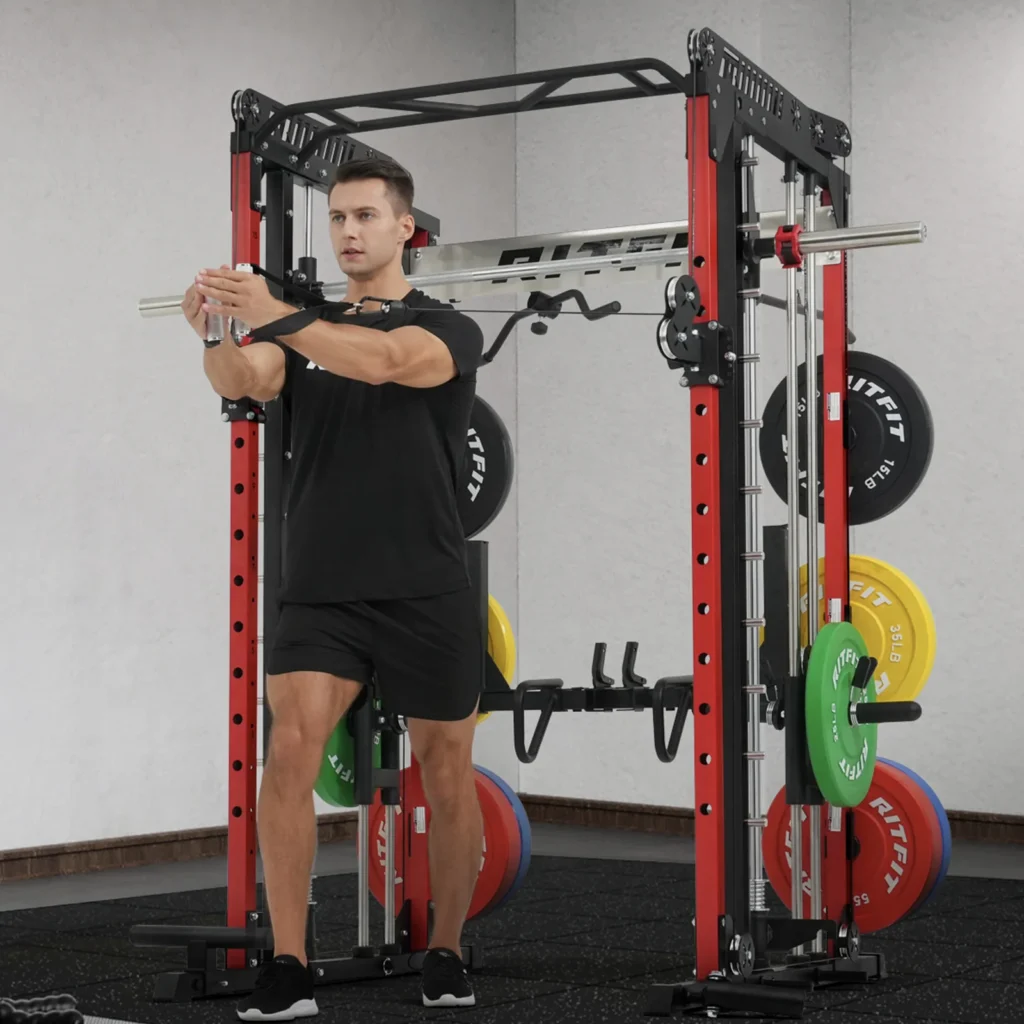
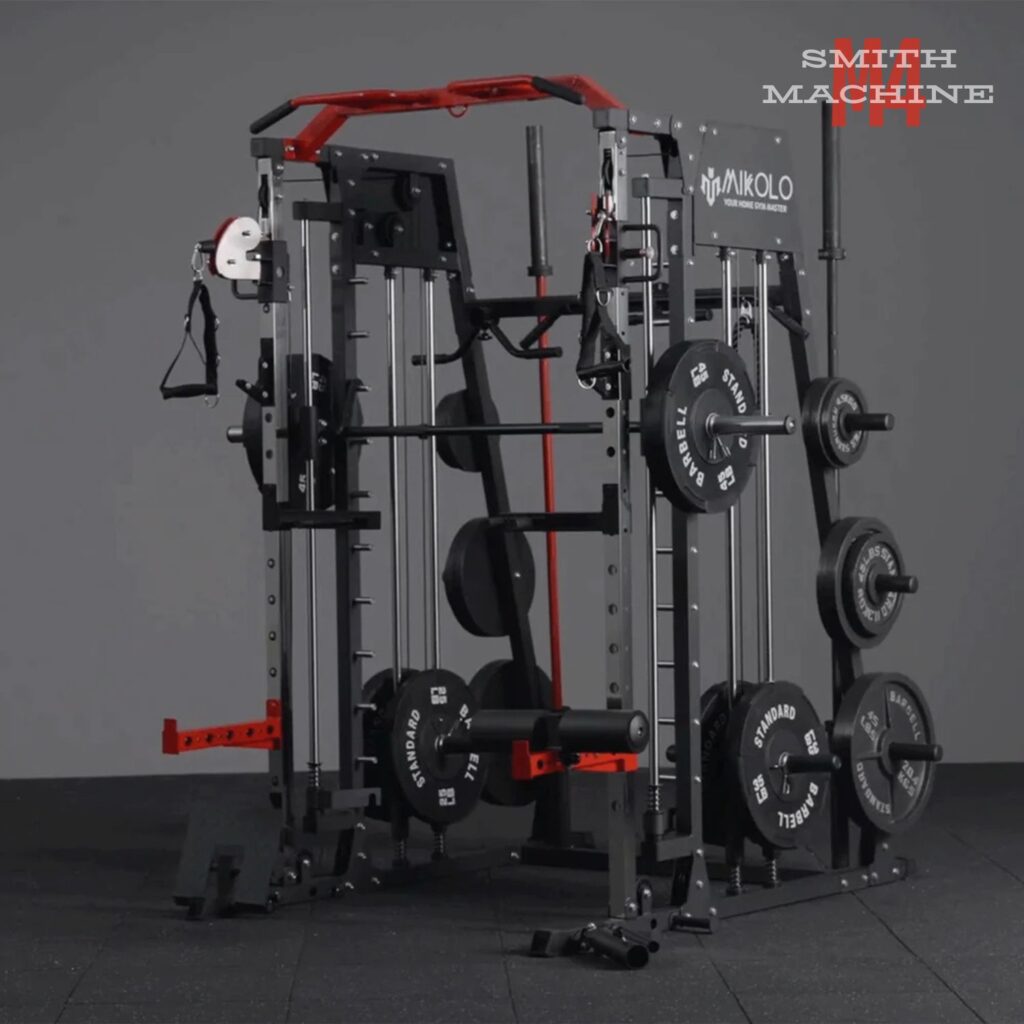
Current product examples include the RitFit M1 Smith Machine and the Mikolo M4 Smith Machine. Both official product pages currently identify a 2:1 cable system. For a closer look at the Mikolo option, read our Mikolo M4 review.
Why a 1:1 Pulley Is Better for Heavy Cable Work
A 1:1 system gives you more direct resistance from the available plates or weight stack. If a machine has a 200 lb stack, a 1:1 configuration lets you use much more of that resistance at one handle than a 2:1 configuration.
A 1:1 ratio is usually the better fit if you prioritize:
- Heavy lat pulldowns and seated rows.
- Cable belt squats and leg work.
- Strength-focused low- or moderate-rep sets.
- Getting the most resistance from a smaller stack or plate carriage.
- Simple load tracking that closely matches the selected number.
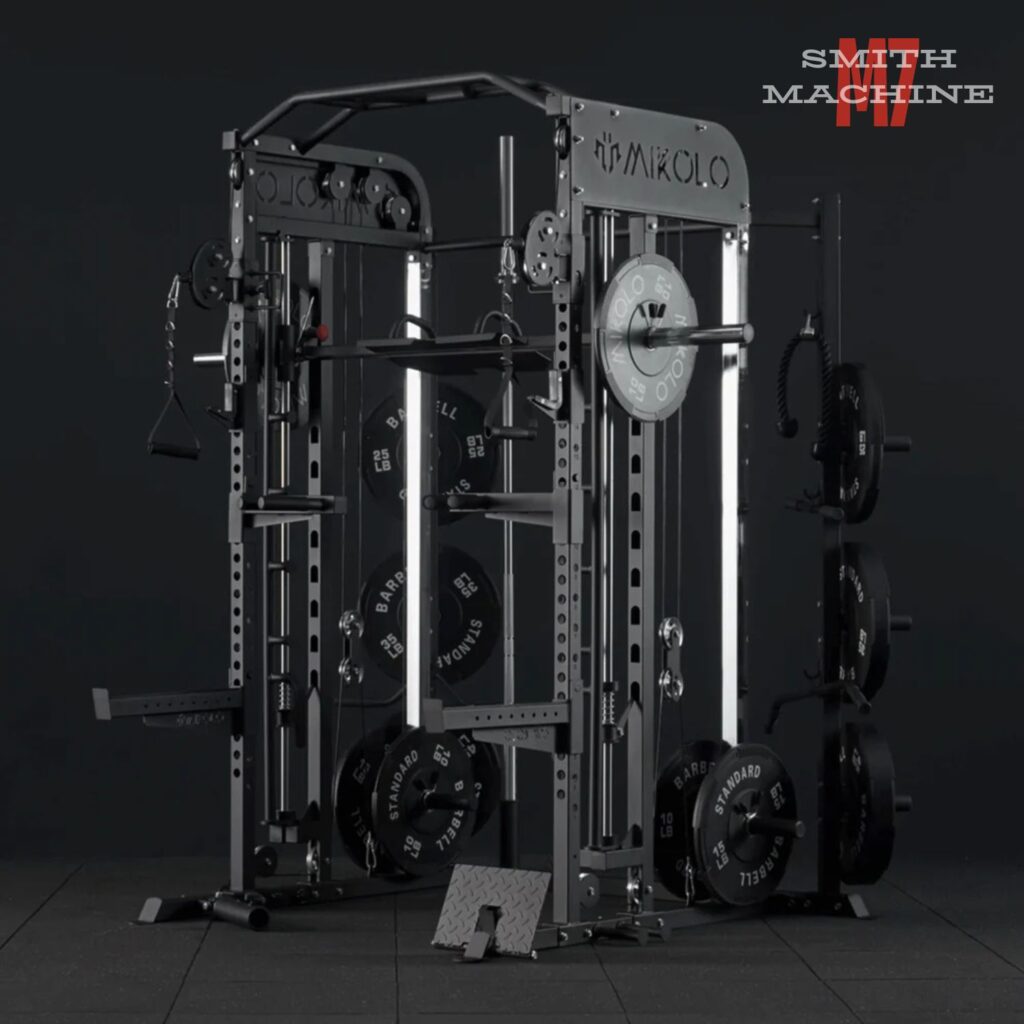
Current examples include the Mikolo M7 Smith Machine and the GMWD SM12. Their official pages currently specify 1:1 cable systems. Our Mikolo M7 review covers the broader home-gym setup.
Does Pulley Ratio Affect the Smith Machine Bar?
Usually, no. The Smith bar moves on guide rails and has its own starting weight, counterbalance design, bearings, capacity, and safety positions. The functional-trainer cables are a separate system, even when both are built into the same frame.
When comparing an all-in-one machine, evaluate these specifications separately:
- Cable system: pulley ratio, stack or plate capacity, trolley positions, cable travel, and included handles.
- Smith system: bar starting weight, counterbalance, rail angle, capacity, lockout positions, and safety stops.
- Rack system: upright size, hole spacing, J-hooks, spotter arms, and attachment compatibility.
If you are still deciding between guided and free-weight training, our Smith machine vs power rack comparison explains the larger tradeoffs.
How to Choose the Right Pulley Ratio
Choose 2:1 if you want versatility and fine progression
A 2:1 system is the safer default for buyers who use cables for a wide mix of upper-body, unilateral, and accessory exercises. It is especially useful when two people with different strength levels share the gym or when the stack has relatively large plate jumps.
Choose 1:1 if you expect to train heavy
A 1:1 system makes sense when pulldowns, rows, belt squats, and other heavy movements dominate your program. It can also be more space-efficient financially: you may not need to buy an extra stack upgrade to reach useful resistance.
Check total resistance, not ratio alone
A ratio without stack size can mislead. A 300 lb stack at 2:1 offers about 150 lb at one handle, while a 160 lb stack at 1:1 offers about 160 lb. Those systems have similar maximum handle resistance despite different ratios. Also check whether the published stack weight is per side or total.
Check your room and the rest of the machine
For an all-in-one home gym, pulley ratio is only one buying factor. Measure width, depth, ceiling height, barbell clearance, bench position, and room to change plates. Compare the full machine in our best Smith machines guide and budget Smith machine guide.
Common Pulley-Ratio Mistakes
- Comparing stack numbers without converting the ratio: 200 lb at 2:1 is not the same handle resistance as 200 lb at 1:1.
- Assuming 1:1 is always better: heavier is not automatically better for cable flyes, raises, or long-range functional movements.
- Assuming 2:1 is only for beginners: experienced lifters often prefer it for smoother unilateral and accessory work.
- Applying cable ratio to Smith squats or presses: the guided bar is a separate mechanism.
- Ignoring dual-handle setups: combining two handles may change how the total resistance is distributed. Follow the manufacturer’s instructions for the exact machine.
Frequently Asked Questions
Is 2:1 pulley ratio half the weight?
Approximately. In an ideal 2:1 system, 100 lb selected or loaded produces about 50 lb of resistance at one handle. Friction and machine design can change the feel slightly.
Is 1:1 or 2:1 better for a home gym?
Choose 2:1 for smoother movement, longer cable travel, and smaller effective weight jumps. Choose 1:1 for heavier rows, pulldowns, and direct load tracking. Neither ratio is universally better.
Can I convert a 2:1 pulley to 1:1?
Do not reroute cables unless the manufacturer provides an approved configuration. Changing cable routing can affect travel, capacity, stability, and warranty coverage.
Does using both handles double the weight?
Not always. It depends on whether the handles use independent stacks, a shared stack, or one connected cable path. Check the manual and the manufacturer’s stated resistance for bilateral use.
Bottom Line
A 2:1 pulley is usually best for versatile functional training and precise progression. A 1:1 pulley is usually best for heavy cable work and maximizing available stack resistance. Convert the published weight into approximate handle resistance, then compare cable travel, stack size, Smith bar specifications, room fit, and exercise priorities.
Before buying, review the current machine specification and warranty on the manufacturer’s page. You can also browse current Mikolo deals and our guide to Smith machine accessories for the rest of the setup.