
This guide is for general fitness education. If you have a heart condition, joint pain, balance concerns, osteoporosis, pregnancy-related restrictions, or you are new to treadmill exercise, ask a qualified professional before adding load.
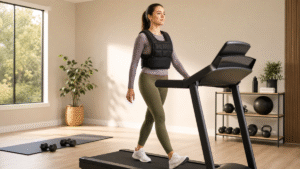
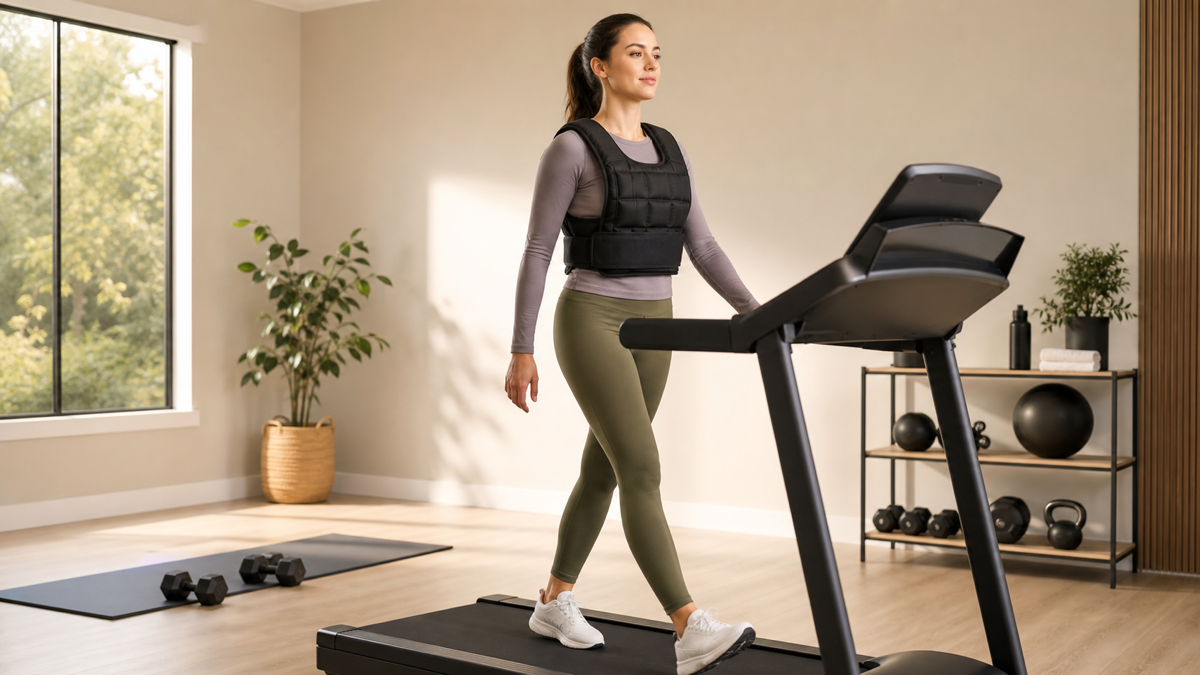
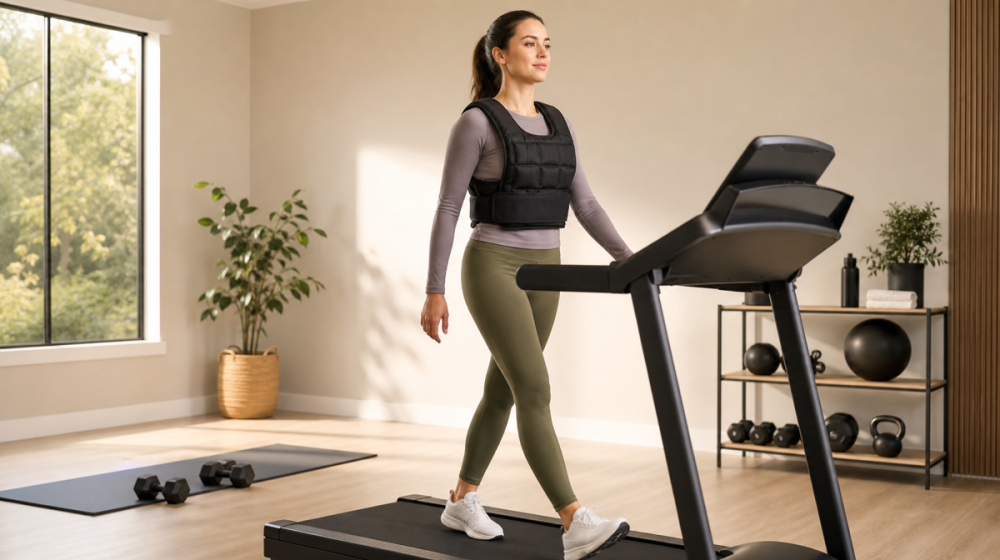
A good beginner weighted vest treadmill workout should feel like a controlled walking session, not a punishment test. Start with a light vest, keep the speed conversational, use incline before speed, and stop if your stride, breathing, or balance changes. The 20-minute plan below is built for beginners who already walk comfortably on a treadmill and want a simple way to add challenge without turning the workout into a run.
If you are still deciding what vest weight to use, read our weighted vest weight guide first. For most beginners, the smartest first treadmill session is lighter than your ego wants and steadier than your playlist suggests.
Who should skip or get clearance first?
Walking with a weighted vest increases the demand on your legs, trunk, breathing, and balance. That can be useful, but it also means the treadmill is not the place to “see what happens” if your body is already giving warning signs.
Get medical or coaching clearance before using a vest on a treadmill if you have chest pain, uncontrolled blood pressure, recent surgery, dizziness, fainting history, significant back pain, knee/hip/ankle pain, foot numbness, pregnancy restrictions, known bone-density issues, or any condition that affects balance. Also skip the vest if you cannot walk hands-free on the treadmill at an easy pace for 15–20 minutes.
For a broader, lower-risk starting point, use our weighted vest walking guide before bringing the vest onto a moving belt.
Beginner setup: vest, treadmill, and safety
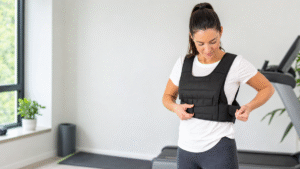
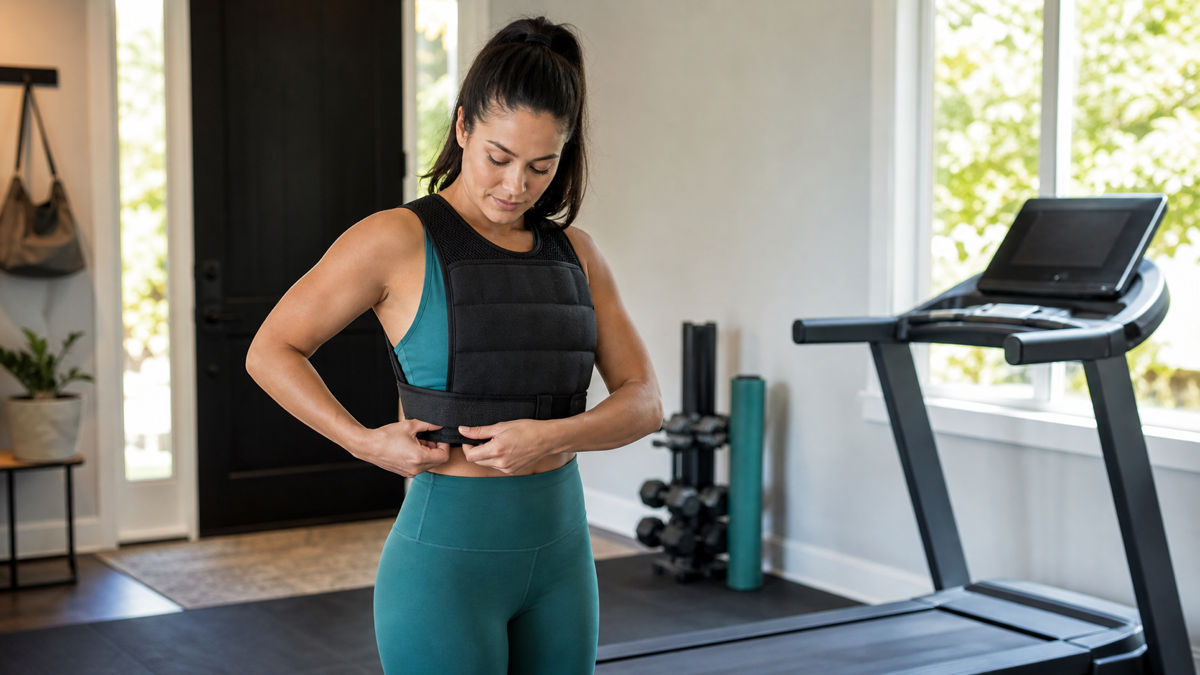
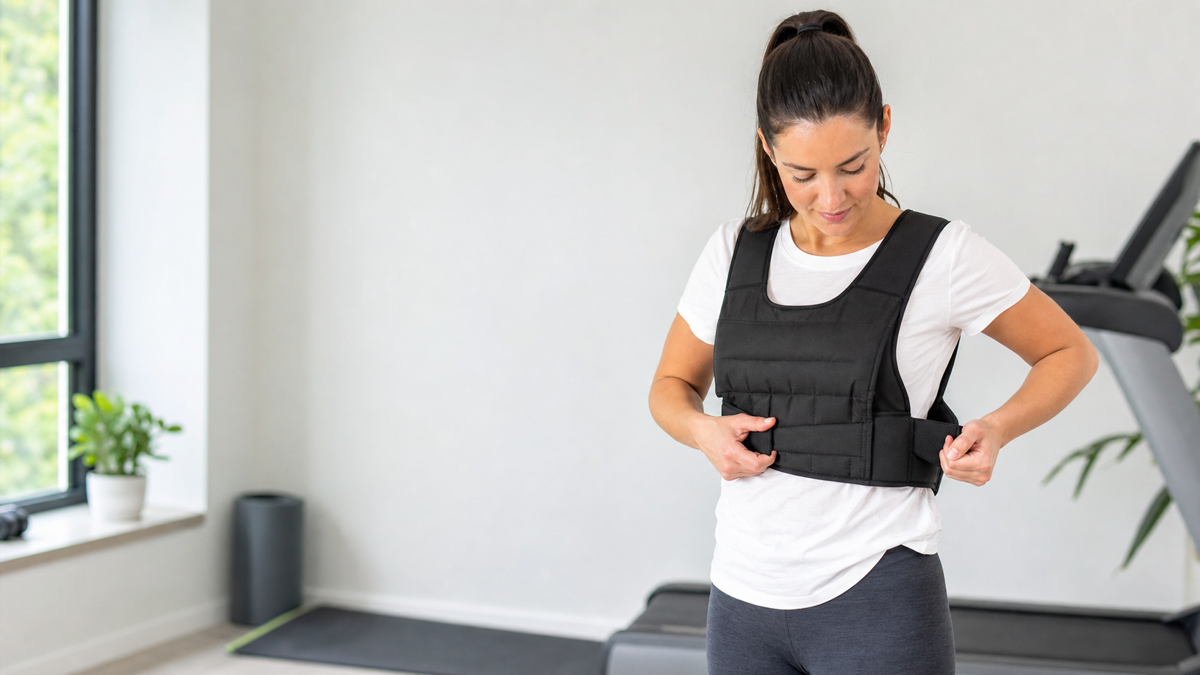
Use a vest that sits close to your torso and does not bounce when you walk. A loose vest encourages you to shorten your stride, grip the rails, or lean back. Those little compensations are exactly what beginners should avoid.
- Load: start around 5% of body weight, or lighter if you are unsure. Do not increase load and incline in the same workout.
- Speed: choose a pace where you can speak in short sentences. Most beginners do better with a brisk walk than a near-jog.
- Incline: begin at 0–3%. Incline is useful, but steep grades can change posture quickly.
- Footwear: use stable walking or training shoes. Avoid soft, unstable shoes that make the belt feel wobbly.
- Rails: use the rails only for stepping on, stepping off, or a quick balance reset. Holding them for the whole workout changes the demand and can hide fatigue.
If you need a vest that adjusts in smaller increments, compare options in our best weighted vests guide. Smaller jumps make treadmill progression much easier.
The 20-minute weighted vest treadmill workout
This starter workout uses time, incline, and perceived effort instead of a fixed speed. That keeps it useful whether your comfortable pace is 2.4 mph or 3.6 mph. Wear the vest only if your warm-up feels stable.
| Time | Incline | Effort | What to focus on |
|---|---|---|---|
| 0:00–4:00 | 0% | Easy | Warm up, find a smooth stride, keep hands off rails |
| 4:00–7:00 | 1% | Easy-moderate | Stand tall and let arms swing naturally |
| 7:00–9:00 | 2–3% | Moderate | Shorten stride slightly without leaning forward |
| 9:00–11:00 | 0–1% | Easy | Recover your breathing |
| 11:00–13:00 | 2–4% | Moderate | Keep ribs stacked over hips |
| 13:00–15:00 | 0–1% | Easy | Check that your feet still land quietly |
| 15:00–17:00 | 2–3% | Moderate | Stay relaxed through shoulders and jaw |
| 17:00–20:00 | 0% | Easy | Cool down gradually before stepping off |
Printable cue: 4 minutes warm-up, 3 minutes easy, 2 minutes incline, 2 minutes easy, 2 minutes incline, 2 minutes easy, 2 minutes incline, 3 minutes cool-down. If the session feels harder than a 6 out of 10, lower the incline or remove the vest next time.
Four-week progression plan
The best progression is boring in the first week and satisfying by week four. Your goal is to finish each session feeling like you could do a little more, not like you survived a treadmill dare.
| Week | Sessions | Progression target | Do not change yet |
|---|---|---|---|
| 1 | 2 | Complete the 20-minute workout with steady form | Vest load |
| 2 | 2–3 | Add 2–5 minutes total time if recovery is good | Load and max incline |
| 3 | 2–3 | Add one extra incline interval or increase speed slightly | Load if speed or incline changed |
| 4 | 2–3 | Add a small amount of vest weight only if gait feels normal | Speed and incline on the same day |
Use only one lever at a time: duration, incline, speed, or load. If you add vest weight, keep the treadmill easier for that session. If you add incline, keep the weight the same. This makes it much easier to know what caused soreness, fatigue, or form breakdown. For this weighted vest treadmill workout, “progress” can simply mean finishing with cleaner form than last time.
Incline vs speed vs load: which should you adjust first?
For beginners, the usual order is duration first, incline second, speed third, load last. Duration builds confidence. Incline adds challenge without requiring faster turnover. Speed can make balance demands rise quickly. Load is powerful, but it changes every step you take.
A simple rule: if your stride gets noisy, your hands drift to the rails, or you feel your lower back working more than your legs, the setting is too aggressive. Turn the incline down before you turn your determination up.
Form cues for walking on a treadmill with a weighted vest
Good treadmill form should look almost boring from the outside. Keep your gaze forward, shoulders relaxed, and torso tall. Let your arms swing close to your body instead of crossing hard in front of your chest. Step under your hips rather than reaching far forward with your heel.
The vest should feel like extra body weight, not like a backpack pulling you around. If it bounces, tighten the straps or reduce speed. If it presses into your neck, shoulders, or ribs, pause and adjust it. If you cannot adjust it comfortably, that vest may be a poor fit for treadmill work.
On incline intervals, avoid the common “ski jump” posture where the hips drift behind you and the torso leans into the console. Stay tall and let the belt move under you. If you need to hold the rails to maintain the incline, reduce the incline.
Common beginner mistakes
- Starting too heavy: a vest that feels fine for five minutes can feel clumsy by minute fifteen.
- Running too soon: weighted running has higher impact and balance demands. Build a walking base first.
- Stacking all variables: heavier vest, faster speed, and steeper incline in one session makes soreness harder to interpret.
- Skipping the cool-down: stepping off immediately after incline work can make some people feel lightheaded.
- Using a sloppy vest fit: bounce and chafing usually get worse on a treadmill because the belt keeps you moving at a fixed rhythm.
If you want strength movements away from the treadmill, pair this routine with our beginner weighted vest exercises. Keep those sessions on separate days at first, or do the treadmill workout at an easier pace.
Cool-down and after-workout check
Spend the final three minutes at 0% incline and an easy pace. After stepping off, walk around for a minute before sitting down. Check your feet, shoulders, and lower back. Mild effort is normal; sharp pain, numbness, unusual joint pain, or lingering dizziness is not.
The next day, your legs may feel like they did extra walking. That is fine. But if your knees, shins, hips, or back feel irritated, repeat the workout without the vest or reduce the incline. The point of beginner training is to make tomorrow’s workout possible.
FAQ
Is walking on a treadmill with a weighted vest safe?
It can be safe for many healthy adults when the vest is light, the pace is controlled, and the person already walks comfortably on a treadmill. It is not a good fit for everyone, especially people with balance issues, pain, or medical conditions that affect exercise tolerance.
How heavy should my weighted vest be for treadmill walking?
Many beginners should start around 5% of body weight or less. If you are new to loaded walking, choose a load that feels almost too easy for the first session. Our starting-weight guide gives more detail by body weight and training goal.
Should I use incline or speed with a weighted vest?
Use incline before speed for most beginner workouts. Small inclines can raise effort while keeping the session walk-focused. Save faster speeds for later, after you can complete the workout without gripping the rails or changing your stride.
Can I do this workout every day?
Most beginners should start with two sessions per week. On other days, do unloaded walking, mobility, or easy strength work. If you recover well after several weeks, you can add a third session.
What weighted vest is best for treadmill workouts?
Choose a snug, adjustable vest that does not bounce and lets you increase weight in small steps. If chest fit, shoulder pressure, or bounce is a concern, our women-focused weighted vest guide covers fit details that also help many smaller-framed users.