
Affiliate disclosure: This article contains affiliate links. FitProGuides may earn a commission if you buy through our links, at no extra cost to you.
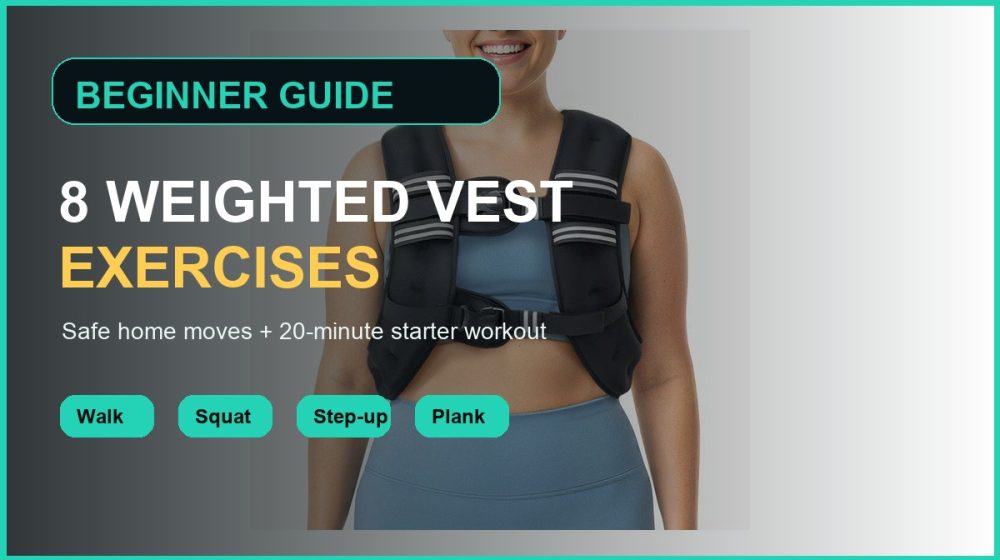
Weighted vest exercises for beginners should feel simple, controlled, and repeatable. The goal is not to turn every walk, squat, or push-up into a punishment session. The goal is to add a small amount of resistance to movements you already do well.
If you are new to weighted vest training, start with bodyweight-only form first. Once your walking posture, squats, step-ups, and incline push-ups feel clean, a light vest can make home workouts more productive without needing a rack, barbell, or full garage-gym setup.
This guide keeps the best weighted vest exercises for beginners simple: low-impact, joint-friendly, and easy to repeat at home.
Quick links: beginner-friendly Zelus picks
Affiliate note: These links go to Zelus product pages. FitProGuides may earn a commission if you buy through them.
- Best all-around beginner vest: Classic X-Shaped Weighted Vest
Check price at Zelus - Best progressive loading pick: Classic Y-Shaped Adjustable Weighted Vest
Check price at Zelus - Best walking-comfort pick: Classic U-Shaped Weighted Vest
Check price at Zelus
Before you start: the beginner rule
A weighted vest should make familiar exercises slightly harder, not turn them into max-effort lifts. If your knees cave during squats, your shoulders shrug during walks, or your lower back arches during planks, remove the vest and fix the movement first.
For general activity context, the Physical Activity Guidelines for Americans provide evidence-based guidance for using physical activity to maintain or improve health. A vest is just a tool that can support that habit.
8 best weighted vest exercises for beginners
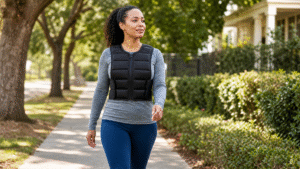
1. Weighted vest walk
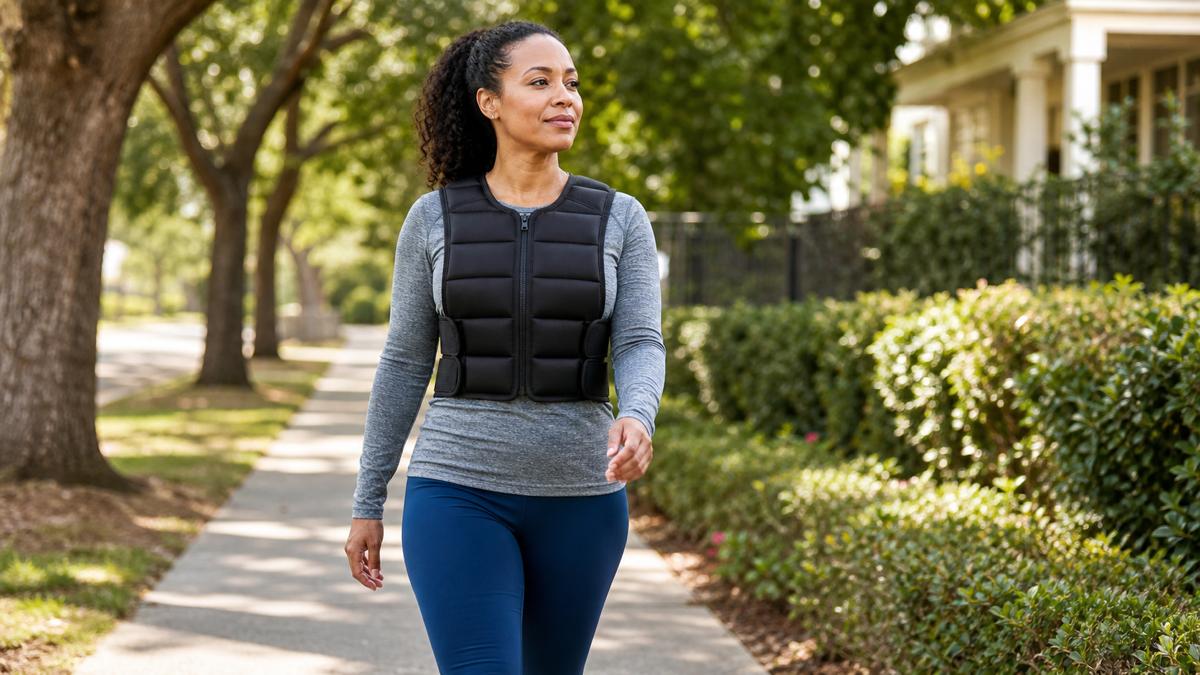
Start with 10-20 minutes on flat ground. Keep your posture tall, ribs stacked over hips, and steps natural. Walking is the best first test because it exposes fit problems before you try harder exercises.
If walking is your main goal, read our dedicated weighted vest for walking beginner guide.
2. Box squat
Sit back to a bench, box, or sturdy chair, pause lightly, then stand. The box gives you a consistent depth target and helps prevent beginners from rushing reps.
- Start with 2 sets of 8-10 reps.
- Keep your feet flat.
- Stop if your knees or lower back feel irritated.
3. Step-up
Use a low, stable step. Drive through the whole foot and avoid bouncing off the back leg. A vest makes step-ups harder without forcing you to hold dumbbells.
- Start with 6-8 reps per side.
- Use a lower step than your ego wants.
- Keep the knee tracking over the foot.
4. Incline push-up
Place your hands on a bench, countertop, or stable elevated surface. The vest adds resistance while the incline keeps the movement beginner-friendly.
Make this easier by raising your hands higher. Make it harder by lowering the hand position only after your reps stay controlled.
5. Split squat
Use bodyweight first. Once balance feels steady, add the vest. Keep your front foot planted and lower slowly instead of dropping into the rep.
- Start with 2 sets of 6 reps per side.
- Hold a wall or rack for balance if needed.
- Do not add load if balance is messy.
6. Calf raise
A weighted vest makes calf raises harder without loading your hands. Hold a wall or rack for balance and move slowly through the full range.
This is one of the easiest exercises to over-rush. Pause at the top, lower under control, and keep the ankles from rolling outward.
7. Plank
Only add a vest if your unweighted plank is clean and pain-free. Keep your ribs down, glutes lightly squeezed, and neck relaxed.
- Start with 2-3 holds of 15-25 seconds.
- Stop before your lower back sags.
- Use a lighter vest than you use for walking.
8. Farmer-style carry
If you already use dumbbells or kettlebells, wearing a light vest can increase trunk demand without changing your grip. Walk slowly, keep your shoulders down, and avoid leaning side to side.
If you do not own dumbbells, a weighted vest walk is enough. You do not need every accessory at once.
Best Zelus models for beginner workouts
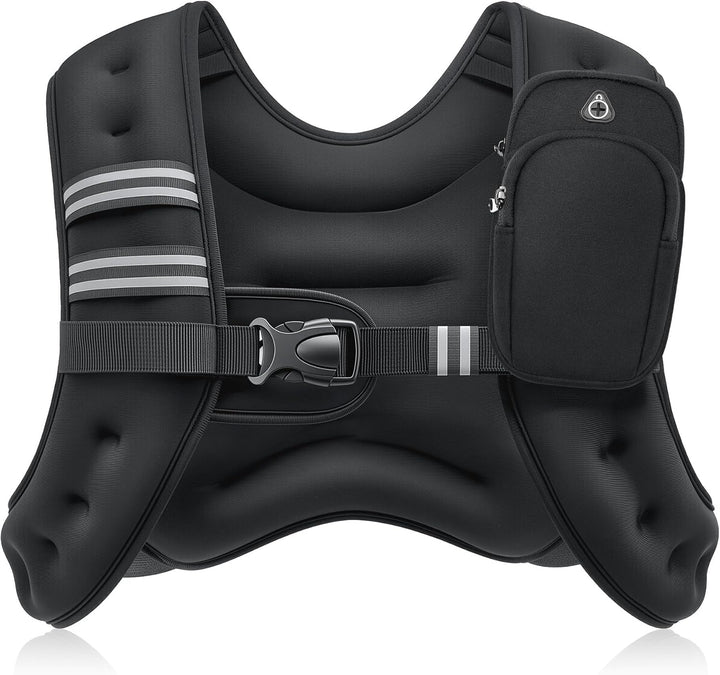
Best all-around pick: Classic X-Shaped Weighted Vest
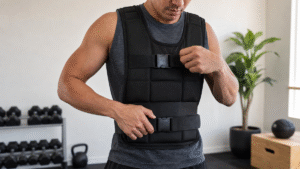
The Classic X-Shaped Weighted Vest is the easiest pick for general beginner workouts. Zelus lists fixed-weight options from 6 to 30 lb, adjustable buckles, and reflective strips. It fits the person who wants one vest for walking, squats, step-ups, incline push-ups, and short circuits.
Best progression pick: Classic Y-Shaped Adjustable Weighted Vest
The Classic Y-Shaped Adjustable Weighted Vest makes more sense if you want room to progress. An adjustable model is useful when you are moving from walking to squats, lunges, step-ups, and conditioning over several months.
Best comfort pick for walking plus workouts: Classic U-Shaped Weighted Vest
The Classic U-Shaped Weighted Vest is better if your training starts with walks and lower-impact workouts. The U-shaped design is the comfort-first option in this group.
If you are still choosing a vest, compare the broader lineup in our guide to the best weighted vests for home workouts. If you are comparing vests with other accessories, see weighted vest vs ankle weights vs weighted belt.
20-minute beginner weighted vest workout
Complete 2-3 rounds at an easy-to-moderate pace. These weighted vest exercises for beginners work best when every rep feels controlled rather than rushed.
- Weighted vest walk: 5 minutes
- Box squat: 10 reps
- Incline push-up: 8-10 reps
- Step-up: 8 reps per side
- Calf raise: 12 reps
- Rest: 60-90 seconds
Use this workout two or three times per week at first. If you feel unusually sore, keep the next session as an unweighted walk.
Common beginner mistakes
When programming weighted vest exercises for beginners, the biggest win is consistency: choose lighter loads, cleaner reps, and repeatable sessions.
- Starting too heavy: the vest should not change your posture or stride.
- Adding jumps too soon: save jumping and running for later, if at all.
- Skipping warm-ups: walk for a few minutes before your first loaded set.
- Chasing fatigue: stop sets with clean reps still available.
- Using one vest for everything: walking, planks, and split squats may need different loads.
FAQ: weighted vest exercises for beginners
How often should beginners do weighted vest exercises?
Start with two sessions per week. Add a third session only if your joints, posture, and recovery feel good.
Should beginners use a fixed or adjustable weighted vest?
A fixed vest is simpler if you know the weight you want. An adjustable vest is better if you want to progress slowly from walking to strength circuits.
What is the safest weighted vest exercise to start with?
Walking is usually the safest first option because it lets you test fit, breathing, shoulder pressure, and posture before adding harder movements.
Can I do weighted vest exercises every day?
Most beginners should not start every day. Use the vest two or three times per week and keep other days unweighted until your body adapts.
Final recommendation
The best weighted vest exercises for beginners are the ones you can repeat with clean form: walking, box squats, step-ups, incline push-ups, split squats, calf raises, planks, and carries. Start light, progress slowly, and choose a vest that feels stable enough to use every week.
For most FitProGuides readers, the Classic X-Shaped Weighted Vest is the best first pick. If you want more progression, choose the Classic Y-Shaped Adjustable Weighted Vest.