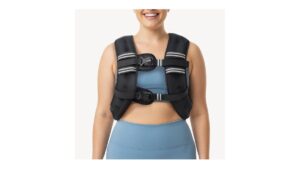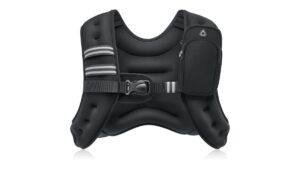
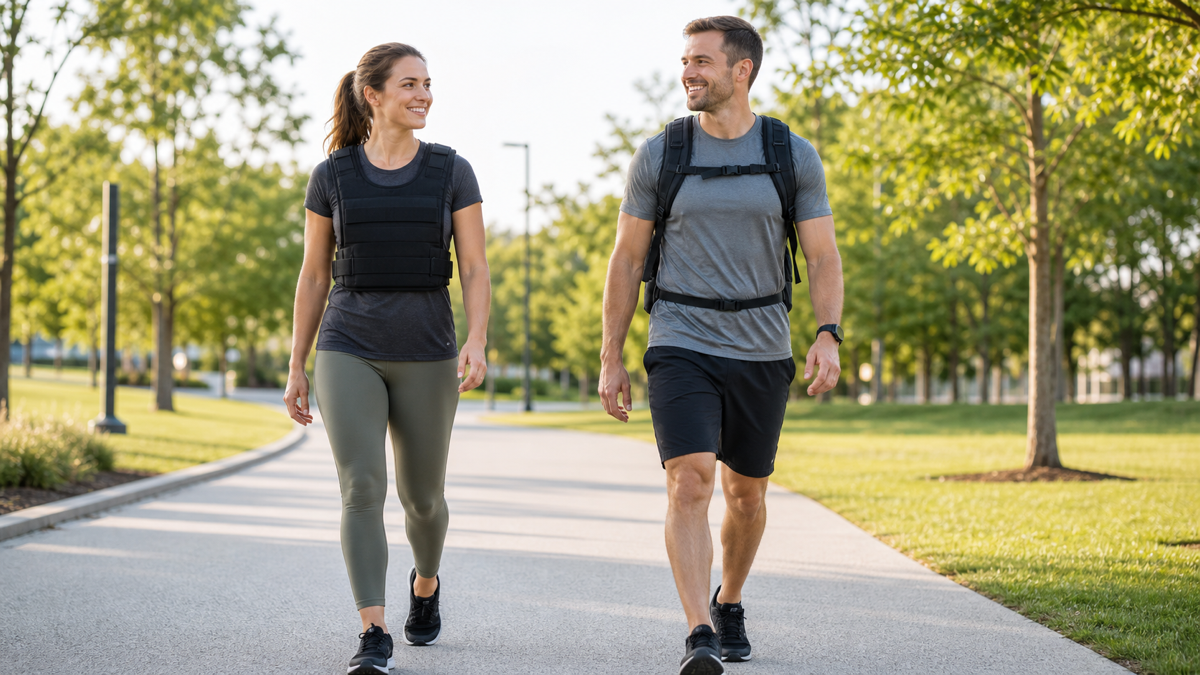
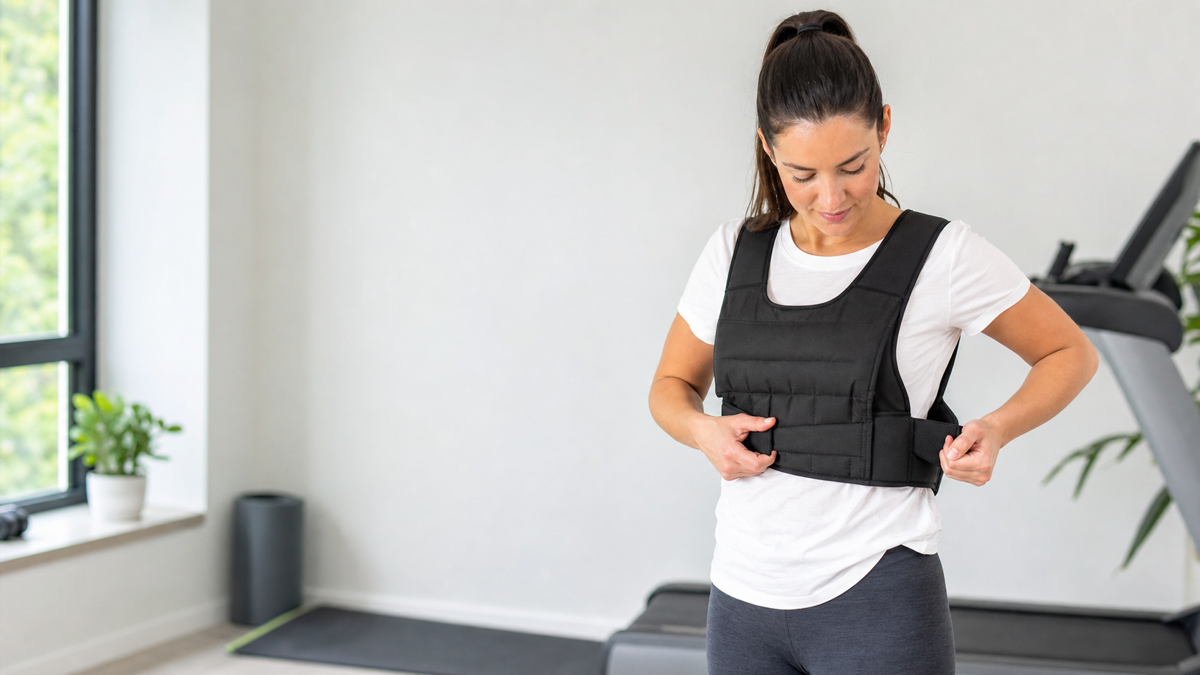
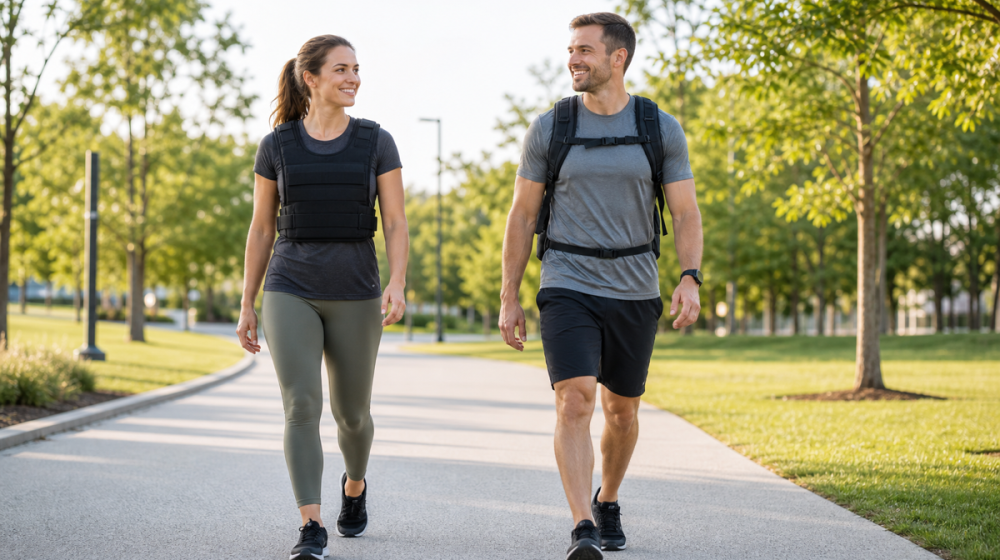
Weighted vest vs rucking backpack—which is better? Choose a weighted vest for short fitness walks, treadmill sessions, stairs, and bodyweight exercises where balanced, close-to-body loading matters. Choose a rucking backpack for longer outdoor walks, higher loads, and carrying water, layers, or other gear. At the same total load, neither option automatically delivers a better workout; fit, comfort, duration, and your training goal decide the winner.
Quick recommendation: Most beginners who want to upgrade a 15- to 30-minute walk or home workout will find a light adjustable vest simpler. If your goal is distance, hiking preparation, or traditional rucking, start with a supportive backpack or purpose-built rucksack.
This guide compares the two tools without pretending they are identical. In the strict sense, rucking means walking with weight in a backpack or rucksack. Walking with a weighted vest is loaded walking, but the load sits differently on your body.
Safety note: Added load changes the demands of walking. Start light and stop if you develop pain, numbness, dizziness, unusual shortness of breath, or a noticeable change in gait. Ask a qualified healthcare professional before loaded walking if you are pregnant or have balance, cardiovascular, bone, neck, back, hip, knee, ankle, or foot concerns.
Weighted Vest vs Rucking Backpack at a Glance
| Factor | Weighted vest | Rucking backpack |
|---|---|---|
| Load position | Distributed around the torso | Primarily behind the torso |
| Best use | Short walks, treadmill, stairs, calisthenics | Long walks, hiking prep, outdoor distance |
| Typical capacity | Low to moderate; model dependent | Moderate to high; pack dependent |
| Gear storage | Little or none | Space for water, layers, and essentials |
| Heat | Covers more of the torso | More airflow at the front; warm at the back |
| Dynamic movement | Usually more stable when fitted closely | Load may shift unless packed and secured well |
| Starting cost | Requires a dedicated training item | A sturdy backpack can work for a trial |
| Our verdict | Best for compact fitness sessions | Best for distance and practical carrying |
7 Key Differences Between a Weighted Vest and Rucksack
1. The load sits in a different place
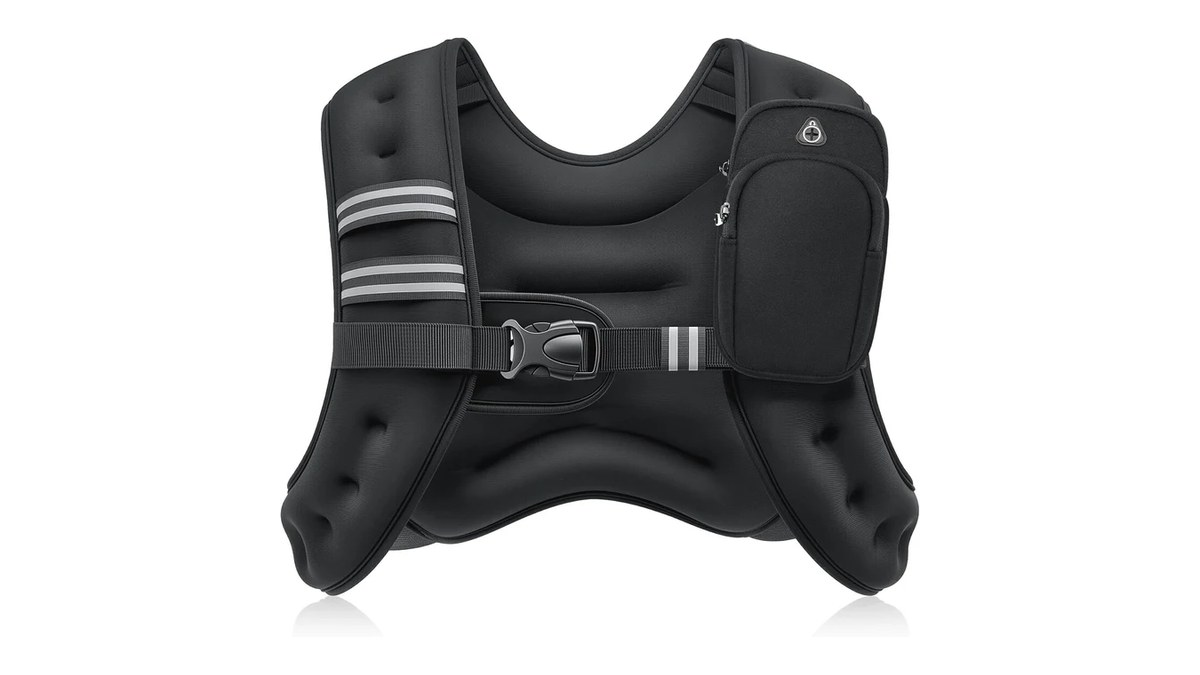
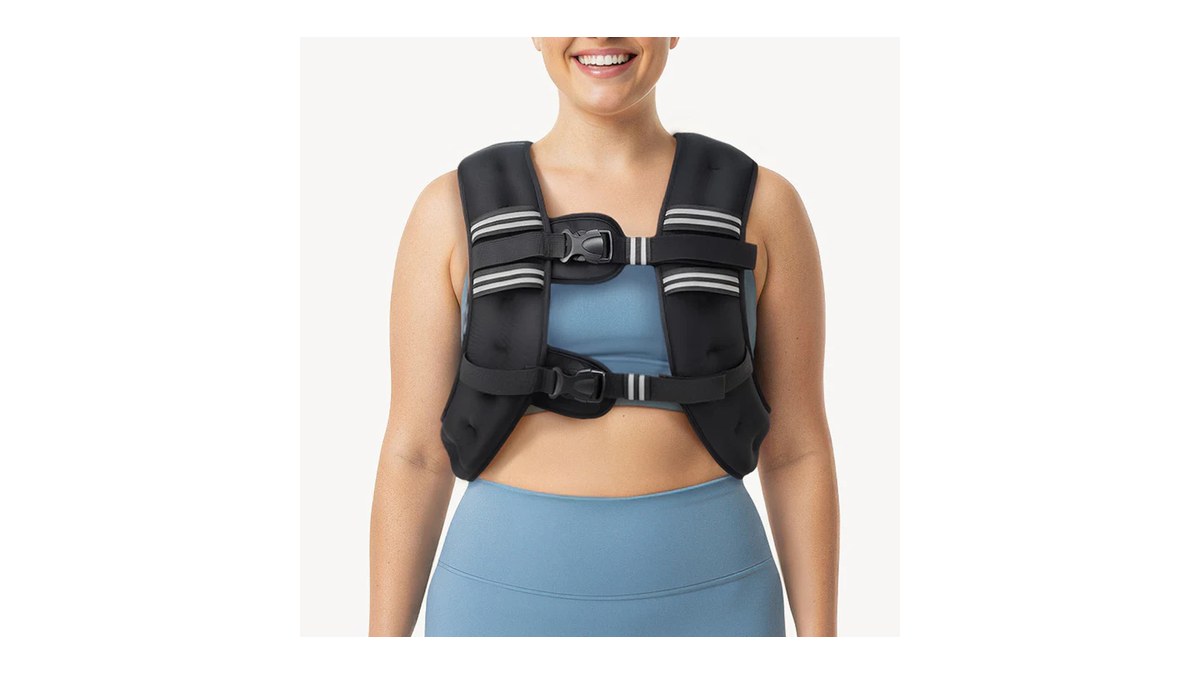
A vest spreads weight across the front and back of your torso. A backpack places most of it behind you, so you may lean slightly forward to keep the combined center of mass over your feet. How much this matters depends on the load, the pack design, and whether a hip belt transfers part of the force away from the shoulders.
Research on backpack load carriage shows that added mass changes the mechanical work performed by the legs and can change gait strategies. A 2023 study using a backpack loaded to 10% of body weight found changes in lower-limb forces and greater hip flexion during walking. That study did not test a recreational weighted vest head-to-head, so it supports caution about load placement rather than proving that one tool is safer.
2. A vest is usually steadier for exercise
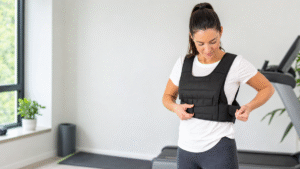
A correctly fitted vest holds the load close during squats, step-ups, push-ups, and stairs. That makes it the more natural choice if loaded walking is only one part of your session. See our weighted vest exercises for beginners for a simple home routine.
A rucksack can also be used for lunges or carries, but loose contents may bounce or shift. A purpose-built ruck plate held high and tight is more stable than a dumbbell dropped into an everyday school bag.
3. A rucksack wins for storage and long outings
A backpack carries water, food, a jacket, phone, first-aid items, and training weight in one system. That practicality matters on long walks and hikes. Padded shoulder straps, a chest strap, and—at higher loads—a supportive hip belt can make distance work more manageable.
Cleveland Clinic distinguishes purpose-built rucksacks from ordinary backpacks: rucksacks are designed to hold load high and reduce shifting, while loose items in a basic backpack may move or press into the back. A sturdy everyday pack is still a reasonable way to test whether you enjoy rucking before buying specialized equipment.
4. A vest is more compact indoors
For treadmill walking, stair machines, and small home gyms, a vest keeps your hands free without a pack protruding behind you. It is less likely to contact a treadmill console or catch on equipment. A fitted vest is also easier to combine with a short circuit.
That convenience is one reason our weighted vest walking guide recommends vests for controlled beginner sessions. It does not mean a vest is automatically safer; an overly heavy or restrictive vest can still change posture and breathing.
5. Heat and pressure feel different
A vest covers both sides of the torso and can feel hot during summer walks. Shoulder panels, front pockets, or tight straps may also create pressure points. A backpack leaves the chest more open but concentrates heat and contact on the back and shoulders.
Fit matters more than the product label. Whichever tool you choose, it should not restrict a full breath, rub the skin, or move enough to alter your stride.
6. Progression works differently
Adjustable vests often use small removable weights. Fixed-weight vests do not. Backpacks can be adjusted with plates, sandbags, water bottles, or other weighed items, but the contents must be secured so they cannot shift.
Beginners do not need a heavy starting load. Cleveland Clinic suggests that an initial ruck may begin with 5 pounds and recommends increasing only one variable—load, distance, duration, or pace—at a time. For vest-specific calculations, use our weighted vest starting-weight chart.
7. “Rucking” is a training style, not just equipment
Traditional rucking centers on covering distance with a loaded pack. A weighted vest can make walking harder, but wearing one does not reproduce every feature of backpack load carriage. If you are preparing for a backpacking trip, ruck event, or occupational pack test, training with the pack and footwear you will actually use is more specific.
Which Burns More Calories?
There is not enough high-quality, direct evidence to promise that a weighted vest or rucksack burns more calories when the load, speed, incline, and duration are matched. Added mass itself increases the work of walking. A biomechanics study found that metabolic cost rose approximately linearly as backpack load increased, while a 2024 weighted-vest study developed a model showing that vest-borne load also changes metabolic cost.
The practical variables—how much weight you can carry comfortably, how long you walk, your pace, and the terrain—will usually matter more than the name of the carrier. Do not pick the less comfortable option to chase a theoretical calorie advantage.
Which Is Better for Your Goal?
| Your goal | Better starting choice | Why |
|---|---|---|
| 15–30 minute fitness walk | Weighted vest | Compact, balanced, and quick to put on |
| Treadmill or stair machine | Weighted vest | Close fit and less rear bulk |
| Bodyweight workout | Weighted vest | More stable across multiple movements |
| Long outdoor walk | Rucksack | Carries water and gear; designed for distance |
| Hiking or backpacking preparation | Rucksack | More specific to the target activity |
| Lowest-cost trial | Existing sturdy backpack | Lets you test light loaded walking first |
| One tool for mixed home workouts | Adjustable weighted vest | Load can be reduced for different exercises |
How to Start Safely
- Walk unloaded first. Know your comfortable time and pace before adding weight.
- Start light. Five pounds or roughly 5% of body weight is a conservative reference for many healthy beginners, not a universal prescription.
- Secure the load. Tighten vest straps or keep backpack contents high, close, and unable to shift.
- Keep your normal gait. Reduce the load if you lean, shuffle, shorten your stride, or cannot breathe freely.
- Change one variable. Add a small amount of time, distance, pace, incline, or weight—not all at once.
- Check the next day. Normal training fatigue is different from new joint, back, or nerve symptoms.
Weighted Vest vs Rucking Backpack FAQ
Does walking with a weighted vest count as rucking?
In casual fitness conversation, people sometimes use “rucking” for any loaded walk. More precisely, rucking uses a backpack or rucksack. Weighted-vest walking is a closely related form of loaded walking with a different load position.
Can I use a normal backpack for rucking?
Yes, for a light beginner trial if the backpack is sturdy, comfortable, and has wide straps. Wrap or secure the load so it cannot move or press into your back. A purpose-built rucksack becomes more useful as distance, frequency, or load increases.
Is a weighted vest better for posture?
Not automatically. A balanced vest may reduce the forward pull associated with a rear load, but a heavy or poorly fitted vest can still cause leaning, shoulder pressure, or restricted breathing. Choose the tool that lets you maintain your normal upright walking pattern.
Which is better for beginners?
A light vest is convenient for short fitness walks and home workouts. A sturdy backpack is a low-cost choice if your goal is outdoor distance or you want to try rucking with equipment you already own. The best beginner option is the one you can load lightly, fit securely, and use without changing your gait.
Can I run with either one?
Running adds impact and amplifies problems with bounce and fit. Build a base of unloaded running and loaded walking before considering loaded running, and seek individualized guidance if you have joint, bone, back, or cardiovascular concerns.
Bottom Line
In the weighted vest vs rucking backpack decision, choose based on the workout you will actually do. A vest is the stronger all-around pick for short walks, treadmills, stairs, and bodyweight training. A rucksack is better for distance, outdoor preparation, higher practical capacity, and carrying gear. Start light, secure the load, and progress only while your posture and gait remain normal.
If a vest fits your goal, compare our beginner-friendly weighted vest picks by load range and use case. You can also compare other wearable options in our weighted vest vs ankle weights vs belt guide.
Affiliate disclosure: FitProGuides may earn a commission if you purchase through qualifying links, at no additional cost to you. This does not affect our editorial recommendations.
Sources
- Cleveland Clinic: Should You Add Rucking to Your Workout?
- Journal of Experimental Biology: Mechanics and energetics of backpack load carriage
- BioMed Research International: Backpack load and walking gait mechanics
- Medicine & Science in Sports & Exercise: Metabolic costs of weighted-vest walking
- Medicine & Science in Sports & Exercise: Force distribution during backpack load carriage