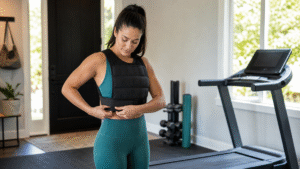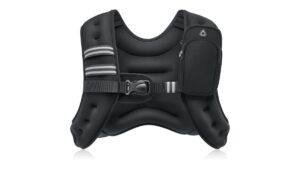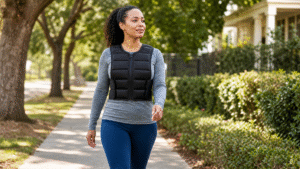
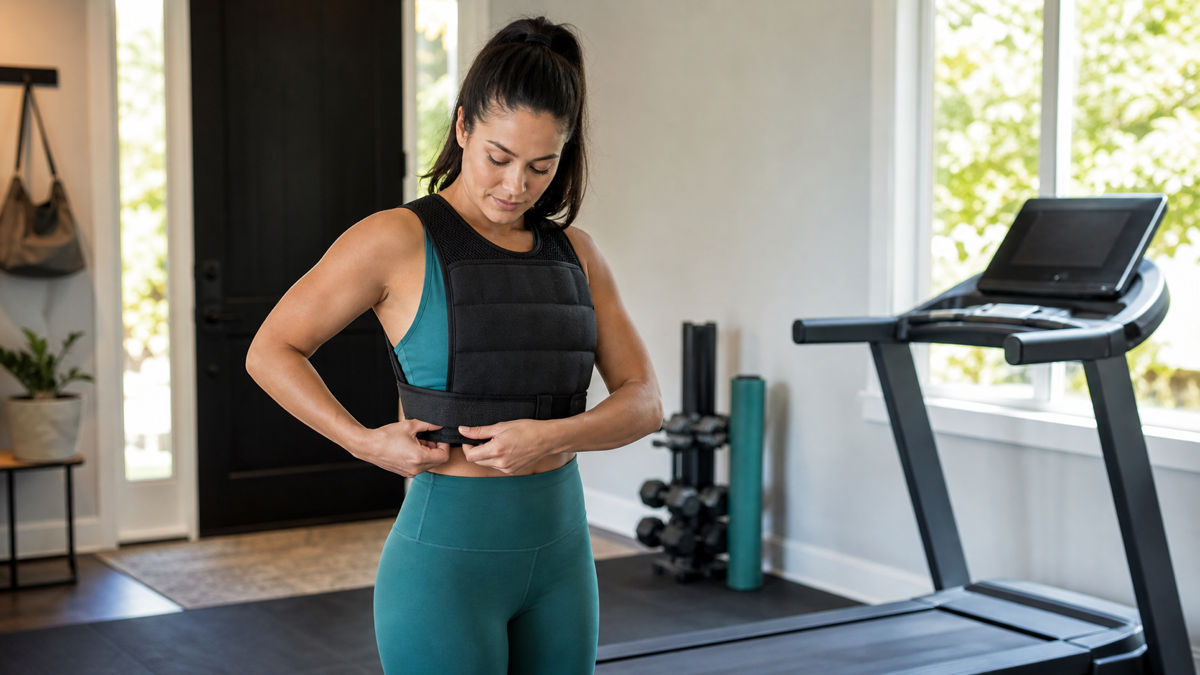
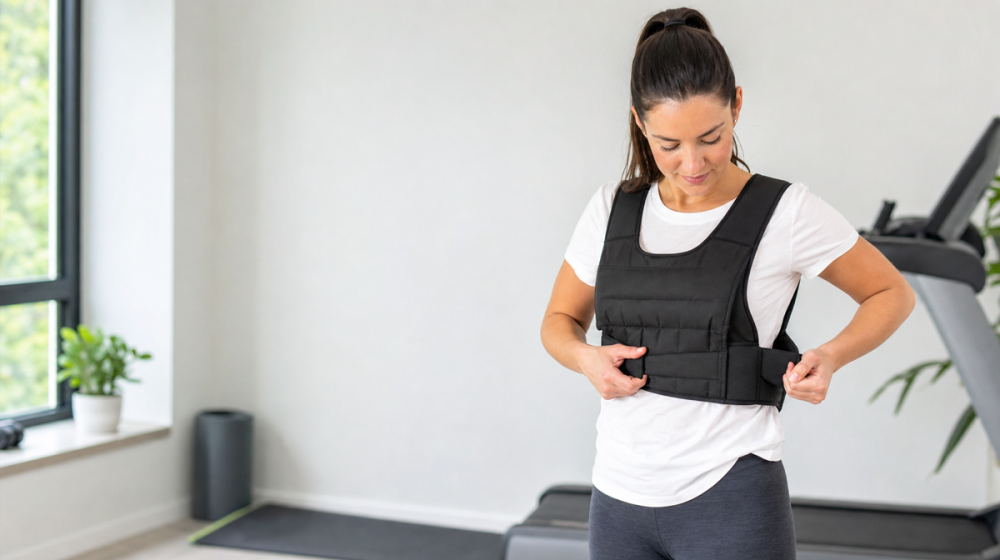
How heavy should a weighted vest be? Most healthy beginners should start with a vest that feels light enough to preserve normal posture, breathing, and movement. A practical starting point is about 5% of body weight—or even a fixed 4- to 6-pound vest—then progress only after several comfortable sessions. Treat 10% as a commonly cited upper reference for general beginner use, not a target everyone needs to reach.
For example, a 160-pound beginner might start near 8 pounds, while a 200-pound beginner might start near 10 pounds. Your training history, exercise choice, vest fit, and any joint or back concerns matter more than hitting a perfect percentage.
Safety note: This guide is general fitness information, not medical advice. Ask a qualified healthcare professional before using a weighted vest if you are pregnant, have osteoporosis, balance problems, cardiovascular concerns, or current neck, back, hip, knee, or ankle pain. Stop if the vest causes pain, numbness, dizziness, unusual shortness of breath, or changes your gait.
Weighted Vest Starting Weight Chart
Use this table as a shopping and setup reference, not a prescription. Round down when the exact weight is unavailable, especially for your first vest.
| Body weight | 5% starting reference | 10% reference | Practical first vest setting |
|---|---|---|---|
| 100 lb | 5 lb | 10 lb | 4–5 lb |
| 120 lb | 6 lb | 12 lb | 4–6 lb |
| 140 lb | 7 lb | 14 lb | 6–7 lb |
| 160 lb | 8 lb | 16 lb | 6–8 lb |
| 180 lb | 9 lb | 18 lb | 8–10 lb |
| 200 lb | 10 lb | 20 lb | 8–10 lb |
| 220 lb | 11 lb | 22 lb | 10–12 lb |
| 250 lb | 12.5 lb | 25 lb | 10–12 lb |
The “practical first setting” is intentionally conservative. A Harvard Health article reviewed by a physician suggests starting with 5 pounds and increasing gradually, while another Harvard Health answer advises beginners to stay around 10% of body weight. Those recommendations support using a light start and treating 10% as a ceiling reference rather than a mandatory goal.
How Heavy Should a Weighted Vest Be for Different Workouts?
1. Start with your activity, not just your body weight
The same vest can feel very different during a flat walk, a set of push-ups, or repeated step-ups. Choose the load for the activity you plan to perform:
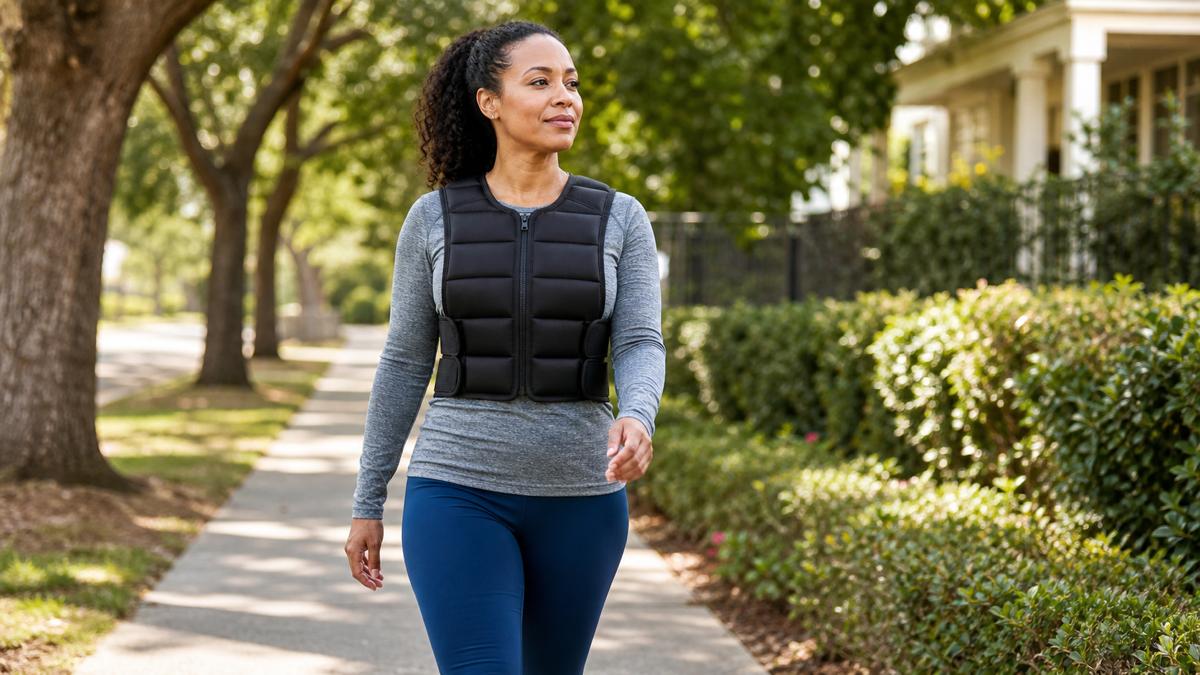
- Walking: Start near 5% of body weight or with a light fixed vest. First build duration on flat ground before adding hills, speed, or more load. See our complete weighted vest walking guide.
- Bodyweight training: Use the lightest load that lets you keep the same range of motion and controlled technique you have without the vest. Review these beginner weighted vest exercises before building a circuit.
- Running or jumping: These activities add impact and require more skill. Beginners should first become comfortable walking and exercising in the vest; heavier is not automatically better.
- Pull-ups and dips: These are advanced loaded movements. Select weight by rep quality and training experience rather than the walking percentages in this guide.
2. Use the talk, posture, and gait checks
A suitable starting load should let you:
- Stand tall without leaning forward or arching your lower back.
- Walk with your normal stride instead of shuffling or stomping.
- Breathe without the vest compressing your chest.
- Complete the planned session with stable, controlled movement.
- Finish without joint pain or lingering soreness caused by the vest.
If one of these checks fails, reduce the load, shorten the session, improve the fit, or remove the vest.
3. Round down when buying a fixed-weight vest
If your 5% calculation is 8 pounds and the available choices are 8, 12, and 16 pounds, choose 8 pounds. A fixed vest is simple and often compact, but it gives you no way to reduce the load on a harder day.
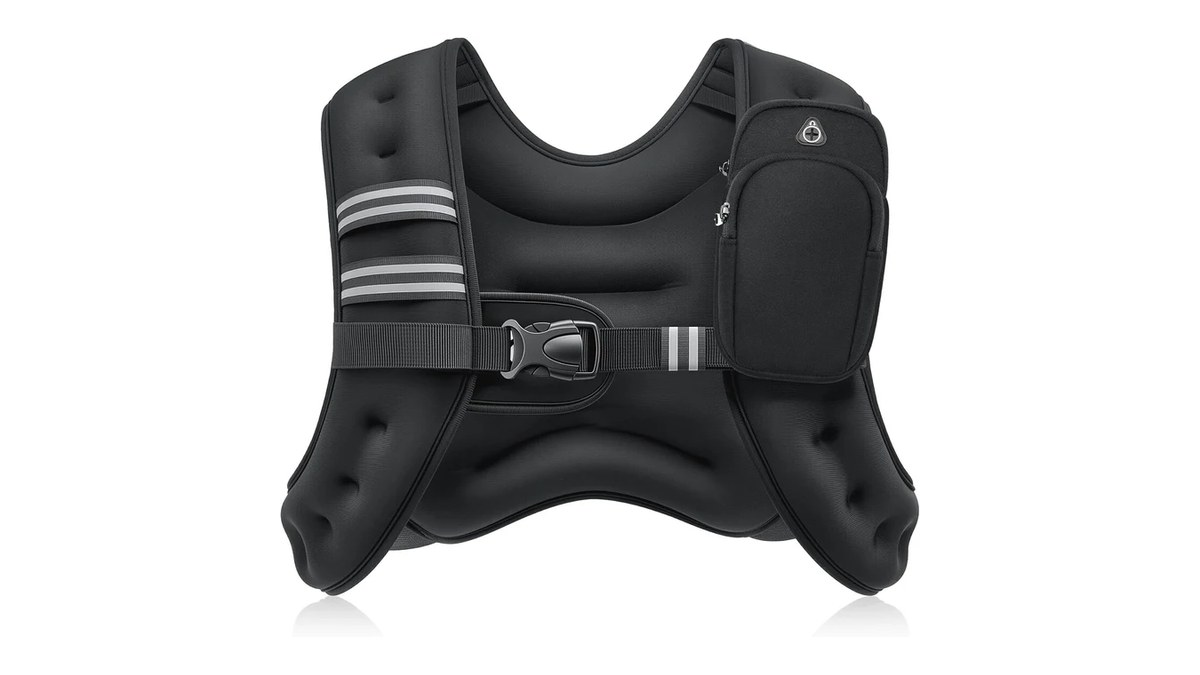
An adjustable vest is usually more useful when you want to walk and strength train with the same piece of equipment. Small removable increments make it easier to progress without jumping from “comfortable” to “too much.” Compare fixed and adjustable options in our guide to the best weighted vests for home workouts.
Is 5% or 10% of Body Weight Better?
For a beginner, 5% is the better starting reference. Ten percent may be appropriate later for some healthy users, but it should not be treated as the default first session.
Research uses different loads for different populations and goals. A randomized trial in older adults compared 3% and 5% body-weight vests. A study of postmenopausal women with osteoporosis used 4% to 8% under a structured exercise protocol. An ACE-commissioned treadmill study tested 10% and 15% loads, but that experiment measured metabolic responses in a specific group and does not establish a universal beginner prescription.
The useful lesson is not that one percentage wins. It is that vest weight must match the user, activity, and progression plan. Research protocols also include screening and supervision that a casual home workout may not have.
A Simple Four-Week Beginner Progression
Change only one variable at a time: vest weight, workout duration, speed, incline, or exercise difficulty. The schedule below assumes you can already walk comfortably without added load.
| Week | Suggested load | Session | Goal |
|---|---|---|---|
| 1 | About 5% or less | 10–15 minutes, 2 sessions | Learn fit, posture, and normal gait |
| 2 | Same load | 15–20 minutes, 2–3 sessions | Build comfortable duration |
| 3 | Same load | 20–25 minutes, 2–3 sessions | Add time, not weight |
| 4 | Same or one small increment | 20–25 minutes, 2–3 sessions | Progress only if every check passes |
There is no need to add weight every week. If your vest allows small increases, add the smallest increment only after the current setup feels controlled across multiple sessions. You can also progress by adding a few minutes while keeping the load unchanged.
Signs Your Weighted Vest Is Too Heavy
Reduce the load or stop the session if you notice:
- Forward lean, excessive lower-back arching, or shoulders being pulled down.
- A shorter, wider, or uneven walking stride.
- Bouncing that you cannot eliminate by adjusting the straps.
- Chest restriction or difficulty taking a full breath.
- New pain in the neck, back, hips, knees, ankles, or feet.
- Numbness, tingling, skin chafing, or pressure points.
- Technique breaking down much earlier than it does without the vest.
More load increases the challenge, but it can also change movement mechanics and add stress. A heavier vest is only useful when you can control it.
Fixed vs Adjustable Weighted Vests
| Feature | Fixed-weight vest | Adjustable vest |
|---|---|---|
| Best for | Simple walking and repeatable light workouts | Progressive training and multiple users |
| Fit | Often slimmer and less bulky | May be bulkier as capacity increases |
| Progression | Requires a new vest to change load | Allows small load changes |
| Buying risk | Choosing too heavy cannot be corrected | Can remove weight if the starting load is too high |
If you are deciding between several wearable resistance tools, our weighted vest vs ankle weights vs weighted belt comparison explains how load placement changes the best use case.
Frequently Asked Questions
What weight vest should a beginner get?
A healthy beginner can usually start with a 4- to 10-pound vest depending on body size, training experience, and intended activity. An adjustable model that can be reduced to about 5% of body weight gives you more room to learn and progress.
Is a 20-pound weighted vest too heavy?
It can be. Twenty pounds equals 20% of body weight for a 100-pound person, 12.5% for a 160-pound person, and 10% for a 200-pound person. The same vest therefore creates very different relative loads. Most beginners should not choose 20 pounds merely because it is a common product size.
Can I wear a weighted vest every day?
Daily use is not necessary for progress, and tissues need time to adapt to added load. Begin with two or three short sessions per week and assess how you feel during the workout and the following day. Your frequency should reflect the activity, load, recovery, and advice from a qualified professional when relevant.
Should I buy a vest based on my goal weight or current weight?
Calculate the initial reference from your current body weight, then round down to a manageable vest setting. Reassess after meaningful body-weight or fitness changes. Comfort and movement quality still take priority over the calculation.
Does a heavier weighted vest burn more calories?
Added load can increase the metabolic cost of walking, particularly when combined with incline, but the result depends on load, speed, grade, and the individual. Do not chase calorie burn by using a vest that changes your gait or causes pain.
Bottom Line
Start lighter than your ego suggests. About 5% of body weight is a practical first reference for many healthy beginners, while a 4- to 6-pound fixed vest may be more appropriate for smaller users or anyone new to loaded walking. Keep normal posture, breathing, and movement; increase only one variable at a time; and treat 10% as a reference—not a requirement.
Ready to choose a model? Compare beginner-friendly adjustable weighted vests by load range, fit, and intended use.
Affiliate disclosure: FitProGuides may earn a commission if you purchase through qualifying links, at no additional cost to you. This does not affect our editorial recommendations.
Sources
- Harvard Health Publishing: Try this—put on some weight
- Harvard Health Publishing: Benefits of walking with a weighted vest
- Journal of the American Geriatrics Society: randomized trial using 3% and 5% body-weight vests
- Rheumatology International: weighted-vest treadmill walking using 4%–8% of body weight
- American Council on Exercise: weighted-vest treadmill study overview